Isabella Weber on How to Defeat the Far Right
· Jacobin
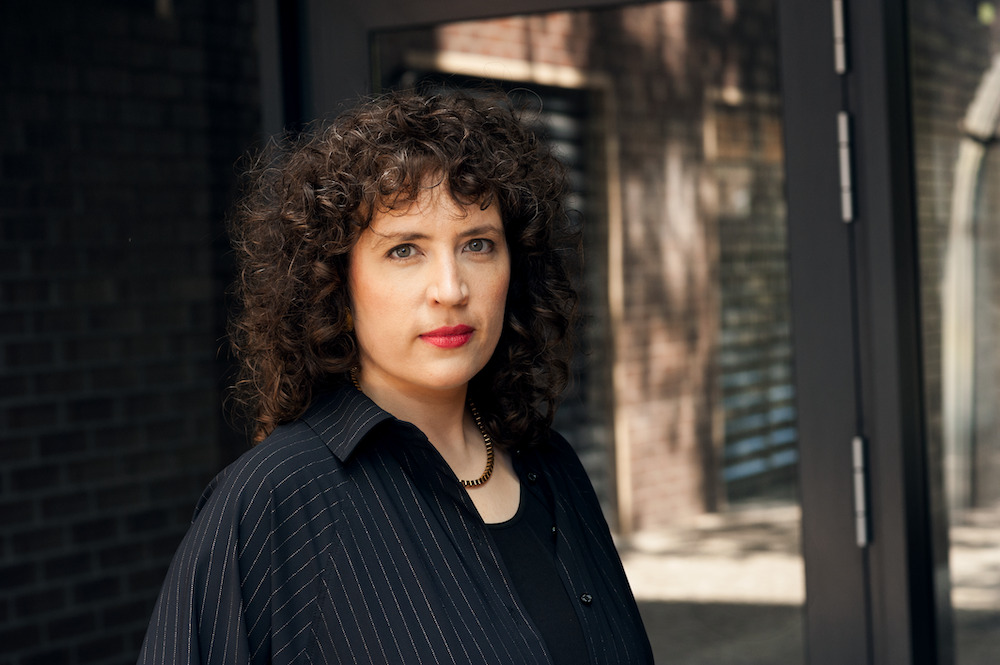
The economist Isabella Weber is best known for her work on what is often called “seller’s inflation,” the ability of firms with market power to hike prices and boost profits during an emergency. During and after the Covid-19 pandemic, Weber was one of the loudest voices criticizing those who treated inflation purely as a product of too much demand, earning the censure of establishment economists in the process. Six years on, her arguments have been largely vindicated. It is clear that while constraints to supply did cause some prices to spike, the resulting cost shocks coordinated corporate pricing that spread inflation across the whole economy.In her new book, Anti-Fascist Economics: In Defense of Affordability, Dignity, and Democracy, she turns to an equally pressing political issue: What is needed to stem the rising tide of far-right extremism? Her answer is an alternative economic playbook, building on her earlier work, which puts affordability of essentials and dignity at its center.Weber spoke to Jacobin about what an economic system that prioritizes ordinary people’s material needs over corporate profits would look like, and how it could contribute to halting the march of what some have called fascism in its tracks.Bartolomeo SalaIn your new book Anti-Fascist Economics, you build a powerful case for a new “economics for common people” as the only antidote to the threat of a resurgent “end-times fascism.”You spend the central part of the book showing how Trump 2.0 was ultimately a consequence of high inflation that shot up the prices of essentials and ate into people’s standards of living. However, you open the book by showing the current threat to democracy is not the result of one mismanaged crisis. Rather, it is the inevitable end point of fifty years of neoliberalism and a system which puts profits above everything else.How is it that neoliberalism — with its dogmatic insistence on what you call “profit fundamentalism” and limited view of freedom as submission to the impersonal rule of the market — almost necessarily leads to fascism?Isabella WeberJust one qualification before we start. I wouldn’t say neoliberalism necessarily leads to fascism. I think fascism is a very complex historical phenomenon that has multiple drivers, and the economy is one of them. Nevertheless, I think it’s helpful to see that there is a kind of convergence between the logics of the two, which is not to say that they are the same, but that, at bottom, they are both forms of social Darwinism.In a neoliberal world, there is this idea that everyone’s worth has to be established on the market, that the market creates a meritocratic hierarchy. If you are rich and are on top of said hierarchy, it is because you have strong abilities, you are superior to others, you have achieved more. Conversely, if you are poor or if you are dependent on social transfers, then this is basically a result of your lack of abilities. Now, in this sense, neoliberalism is a very hierarchical, competition-based way of seeing the world. Under fascism, we don’t have a hierarchy that is established through the market, but a “natural” one. Indeed, the whole idea of fascism is that the decadence and despair of the present are the result of interventions against this natural hierarchy, and the job of fascism is to restore a mythical past where this natural hierarchy is again allowed to play out.This natural hierarchy in the fascist case explicitly deems some populations dispensable. You see this very clearly with climate change, where if we let climate change happen, then some populations will die, or the energy crisis, where if we let the energy prices explode, then some people’s livelihoods may be destroyed. From the neoliberal perspective, this is an unfortunate collateral damage. Unfortunately, the market produces outcomes where some people’s livelihoods are destroyed. What the fascists do is to embrace this Malthusian logic that is baked into neoliberal thinking. They see it as a cleansing mechanism where some of these surplus populations are being cleaned out, and thus more space is made for the supreme race.Bartolomeo SalaSo fascism is a kind of last resort for neoliberalism?Isabella WeberSo far I have talked about neoliberalism as a system of thought. However, neoliberalism in practice, as a regime to organize our economy, has brought about spectacular wealth concentration, especially corporate concentration. Just to give you a statistic, in 1930, the top 0.1 percent of firms, in terms of their asset ownership, owned 47 percent of assets in the United States. In 2013, the top 0.1 percent owned 88 percent of the assets.Now, the fact that neoliberalism brings about this concentration of power and conceals this process, thereby opening the door for the possibility for the fascists to embrace it, is one side of the coin. The other side of some people getting extremely rich is, of course, many people living enormously precarious lives and being constantly at the mercy of the next market turmoil. To be sure, economic insecurity is not the same as poverty, and often it’s those who have something to lose who are most receptive to the far right’s promises. It’s a lack of alternatives — which is programmatic under neoliberalism — and the powerlessness that comes with it that makes the fascist promise of restoring the self-worth of people whose lives have been degraded over decades by returning to a mythical past of racial purity appealing.Bartolomeo SalaThe place where this inability to take common people’s material needs seriously manifested itself in full force and ultimately proved fatal is the idea of “vibecession,” that is, the idea that the US economy was booming post-Covid and that people who felt otherwise were just wrong.Many of the arguments you made five years ago — that we were going through a crisis of affordability driven by corporations treating shocks and bottlenecks as an excuse to jack up prices — have become mainstream. However, at the time, the debate around high inflation was divided between those who advocated for austerity and those who suggested simply waiting for the storm to pass. Ultimately, this softer approach won out, but it did little to combat the effects of the ballooning cost of living.What did it get wrong about what you at the time called a case of “seller-induced inflation”? What could have been done differently? And why was Joe Biden’s unwillingness to be more bullish with big business and go after their profits ultimately the cause of the Democrats’ downfall?Isabella WeberIsabella Weber On the subject of who won the debate in terms of policy response: it is true that Team Wait-and-See prevailed in terms of fiscal policy, but we did get aggressive interest rate hikes eventually, which was the prescription of Team Austerity. That the fiscal side kept going strong partially offset monetary austerity. Anyway, sorry to be such a professor . . . Bartolomeo SalaThat’s what we are here for!Isabella WeberOkay, going back to the subject of inflation, I think we need to realize what it is that happened in this crisis. First, we had a pandemic, the first global pandemic in a century. People were either locked down at home or working on the front lines exposed to the virus.Then the economy restarted. However, due to all the dislocation that the shutdowns had created, suddenly there were lots of shortages. These shortages created a pretext for price hikes, but the way this played out depended on the sector: in the case of energy, there was a collapse in demand during the lockdowns. Oil companies then shut down some of their production capacity. When demand came back on, they were in no rush to bring capacity back up. This mismatch sent oil prices upward, and the Russian attack on Ukraine made them explode. The question then is: How does the rest of the corporate world react to an increase in energy prices? Do they absorb this price increase, or do they pass it on in ways that protect their margins or maybe even increase their margin? What we saw is that the corporate sector as a whole managed to claim record profits right in the middle of this crisis.Now, this is an economic question. As a heterodox economist, my inclination is always to point to the structures, and my research shows how emergencies have opened windows of opportunity for price hikes. However, it’s also a question of morality and how we organize our society and economy. Capitalism is always immoral, but when, in a situation like this — where people have been fighting for their survival and the world has lived in fear over the threat of the virus — the reaction of the corporate sector is to jack up prices in ways that produce record profits, then this brings the immorality of capitalism out into plain sight. That’s why people were very angry about what myself and others called “greedflation.”Then there is the question of lived reality. People keep going to work every day and see the price of essentials, from food to energy to housing to transportation, become more expensive. This forces them to impossible choices between buying another used car because the old one broke and paying rent. This creates an enormous sense of insecurity and anxiety. If you just go, “Okay, let’s wait for this to pass,” that’s just another demonstration of the inability of the government to act.This is the contradiction that I start the book with. Under neoliberalism, governments say democracy is the greatest of all political systems, but when it comes to people’s basic material needs, unfortunately there seems to be nothing they can do. That’s already a contradiction in normal times, but even more so in crises, because people’s trust in democracy is then undermined in fundamental ways.Bartolomeo SalaAnd it’s not that these crises are one-offs, if anything, they will become ever more frequent.Isabella WeberWe have seen it in polls time and again. As inflation progressed, more and more people started to blame corporations for high prices and believed the government should intervene and impose price controls. As you say, this is not ancient history, and these shocks are not random. We are in a global crisis of disintegration of our natural environments and geopolitical order that makes future, frequent shocks inevitable.There is so much more to antifascist economics than targeted price controls for essentials. However, in a time of crisis like ours, the question of price stabilization for the things people cannot do without is ultimately a question of whether the government is going to intervene to secure people’s access to affordable living conditions, even if doing so means going against the interests of powerful corporations or those who insist that the market is the only arbiter and so expose their constituencies to deeply immoral outcomes.Bartolomeo SalaAs you write in your chapter “Capital Won’t Save Democracy,” capitalists and fascists are natural allies today just as they were in the 1930s — not just because the latter line the pockets of the former when stripping the state for parts, but because fascists are the best bulwark for their monopolies. Indeed, the two share a common enemy, “democratic states . . . when they regulate business activities in the common interest, protect the environment, or uphold labor rights.” Can you tell us why the unholy alliance between Davos Men and strongmen like Donald Trump isn’t an anomaly but a natural development?Isabella WeberFirst of all, one of the things that really struck me about being in Davos in 2025 during the inauguration of Trump was that large parts of the business community appeared to me almost more like followers than leaders. Many of them didn’t donate to Trump, but the moment the power shifted, they went with Trump. They are profit fundamentalists and, as such, they will always go with power.Now, to your question of what the democratic state does here, I actually found Javier Milei’s Davos speech very telling. He is the president of a country, of course, but he insists that all the problems that the West has are a result of feminist wokeness, which again goes back to this fascist idea that there are natural hierarchies and that if you are trying to intervene, you are messing up with the natural order. His diagnosis of the decline of the West is simply, “if only free enterprise had prevailed in its pure form, then we would not have had this aberration.” That’s I think how someone like Milei comes to embody the convergence between neoliberalism and fascism that we talked about in the beginning.As to what’s actually happening in terms of who globalization is working for, the first China shock was really an outsourcing shock. China was one part of the story, but the other was multinational companies headquartered in the West that were perfectly happy to throw a significant share of the working class in Europe and the United States under the bus. The second China shock is a very different beast, which is why the name is somewhat misleading. This shock is one where the almost universal dominance of Western corporations is suddenly under threat, as Chinese companies approaching the technological frontier in key industries start to pose a serious challenge to a world hierarchy in the global division of labor that dates back to the nineteenth century.What’s interesting is that the moment that exposure to markets, free capital flows, and open trade flows no longer is univocally to the benefit of Western-headquartered companies, the allegiances to these liberal ideals start flipping and instead an extreme anti-China “by any means necessary” stance ends up becoming mainstream. What I’m arguing is that this is important context that we need to acknowledge when we look at how globalization of the neoliberal type is being destroyed and is being replaced with tariff blitzes and geopolitical maneuvering that bring the whole toolbox of the might of states into the game of fortifying a certain global division of labor.Bartolomeo SalaIf all that is possible is a zero-sum game between states and corporations, the best way to ride out the crisis is to invite it and hope to win, so at least in this zero-sum world you are the one calling the shots.Isabella WeberExactly, it’s a zero-sum competition, which is now being fought with different means in a way, but it’s still a zero-sum competition.Bartolomeo SalaCould you talk a bit explicitly about how you understand antifascist economics?Isabella WeberAn important inspiration is Karl Polanyi, who wanted to write a book, “Masterplan for the Common Man,” as an antifascist economics. For him, when there is a crisis that threatens the existential foundation of people’s lives, what he calls countermovements emerge. Fascism is a countermovement to fortify a profit fundamentalist order with state violence. What I am arguing is for a countermovement against today’s “end-times fascism” — to use Naomi Klein and Astra Taylor’s term — one that secures the material foundations of people’s livelihoods as the precondition for a dignified life as its overarching goal.The starting point for this is, very concretely, essentials for meeting people’s needs and for production systems, because obviously, to fulfil those needs, we need to have certain production structures in place. That’s the core. Then there are affordability policies that keep all of this together — things like rent freezes, a basket of price-controlled goods, free public transportation, or public ownership of energy and affordable utilities — policies that bring immediate relief.However, in order to sustain a price intervention, you need to change the structures of provisioning in these essential sectors. And that, ultimately, is a question of ownership. Given that we are in this global crisis of livelihoods, it’s not enough to bring down the price of gasoline and thereby render life more affordable to people who drive their cars, and meanwhile we burn through ever more oil and let the planet burn. We need to use those measures that stabilize prices to buy time for the structural change that can get us into a situation where our use of natural resources becomes compatible with the continued existence of human lives on planet Earth, which might sound a bit big, but I think that’s really what is at stake here.Bartolomeo SalaHow can this economic outlook, that starts with people’s essential needs, work hand in hand with combating climate change and responding to anxieties about globalization?Isabella WeberPolanyi has this idea of land, labor, and money being essentials. I am basically broadening this category by saying that all the things that our life depends on are essentials, because for all of these things, it’s a lie that they can just work like the market for plastic toys or chewing gum. If the rent is too high, it’s not like you just reduce your demand. You need shelter and a place to live. And for a dignified life, you also need to be able to live where your friends are and where your family is. You cannot just be moved around like a fungible atom from one place to the next because rent went up. For food, it’s even more straightforward. You can’t say, the price of food went up, I’m not going to eat.The question then becomes: How do you organize each of these sectors in ways to achieve short-run affordability and to change the structure of provisioning in service of, among other goals, climate stabilization? What I’m arguing for in the case of agriculture are buffer stock systems, ideally multilateral, where you have a public stockholding entity that buys when the prices collapse because there’s a bumper harvest and sells when there’s a supply shock that constrains supply and prices spike. Now, the effect of such an entity would not only be to stabilize prices but also to change the dynamic in a market where right now four global food commodity trading companies control 70 to 90 percent of global food commodity trading.If you have such public stockholding systems, you basically build a massive procurement operation, because you start to buy grain and other durable commodities on a large scale. This allows you to set conditionalities: you only buy certain types of grain that are climate resilient; you buy types of grain that have been produced in a certain, environmentally friendly way. You then could combine it — indeed you should combine it — with a procurement and industrial policy for green fertilizers. By building out this public capacity, you also build out a lever that you can use to change the ways in which you organize food production in a sector — agriculture — that is one of the most difficult to decarbonize. By contrast, if you go in with carbon prices, in a context of already high inflation where food prices are up by more than 30 percent since 2019 like in the United States, you just make things worse.The same principle applies to the housing crisis. If you implement rent freezes, then the next step is to create more public housing, which, in a city like Berlin, could include socialization of large-scale corporate landlords and real estate companies that already control significant shares of your housing supply. If you take this housing stock over and put it in public hands, you have a public option that has a significant impact on what is happening in the housing market as a whole. You need to build more, of course, but you can make sure it’s done in green ways. Same for energy. And then, when you take all three together and add other essentials like transportation, you really are getting into the territory where you are tackling significant shares of the resource use and emissions in your economy.Bartolomeo SalaBrilliant. We didn’t really get into the subject of global trade and how an agenda of this kind would remove the trigger for renewed competition and imperialism, which is a shame. Not sure if you have any final thoughts to add?Isabella WeberSo maybe to wrap up: the idea is to put a floor under people’s livelihoods by guaranteeing affordable livelihoods in such a way that, over time, you change the ways they are provisioned. But you also put a ceiling on extreme forms of wealth and corporate power. This means of course taxing the ultrarich, antitrust laws that are willing to break up large corporations, but also public options and ownership. Because when you create public opinions, you create public power that can act as a counterpoint.Now, if you look at this from a macroeconomic perspective, then what I am proposing also is a regime for “inflation preparedness,” because when shocks hit, you would not let the prices of energy and food commodities shoot up and create these knock-on effects across the economy, and then react with interest rate hikes that not only throw people out of work and treat their livelihoods as collateral damage but also make the investments that are needed to change the structures of your economy more expensive and out of reach. Inflation preparedness, as I’ve described it, de-emphasizes the blunt tool of monetary austerity. This means that you are freeing up space for things like a full employment policy, where if you invest in these essential areas, you would also be creating useful and decent jobs. And by having this form of public job creation, you would actually also again create public competition to private employers by offering the kind of labor conditions that are necessary for a dignified life. The right to a good and meaningful job becomes a real possibility. So, in that sense, if you put all of this together, it actually becomes a coherent program, also macroeconomically speaking.And then in terms of the international dimension, what I’m arguing is that affordability is also a peace question. We see this very clearly with the Iran war. Working toward peace is actually working toward sustained affordability. Now, in terms of the international trade, what I’m arguing is to move beyond the dichotomy between nationalist protectionism and free-trade liberalism, and to have forms of managed trade that are organized in the interest of commodity-producing nations in the Global South, which are extremely vulnerable to commodity price swings, but also in the interest of working people around the world.This article originally appeared in Jacobin, a democratic socialist magazine publishing long-form essays and analysis on politics, economics, and culture. Subscribe to the print edition for $20 a year.
Visit freshyourfeel.com for more information.