What It Means to Protect Elections
· The Atlantic
Subscribe here: Apple Podcasts | Spotify | YouTube | Overcast | Pocket Casts
Visit newssport.cv for more information.
The relatively smooth functioning of the midterms did not end President Trump’s threat to American election integrity. After initially accepting the results, Trump has begun calling them into question, and House Republicans have named the outspoken 2020-election denier Jim Jordan as their next leader. Ensuring a free and fair 2028 presidential election and a peaceful transition of power remain pressing concerns for anyone who wants the country back on solidly democratic footing.
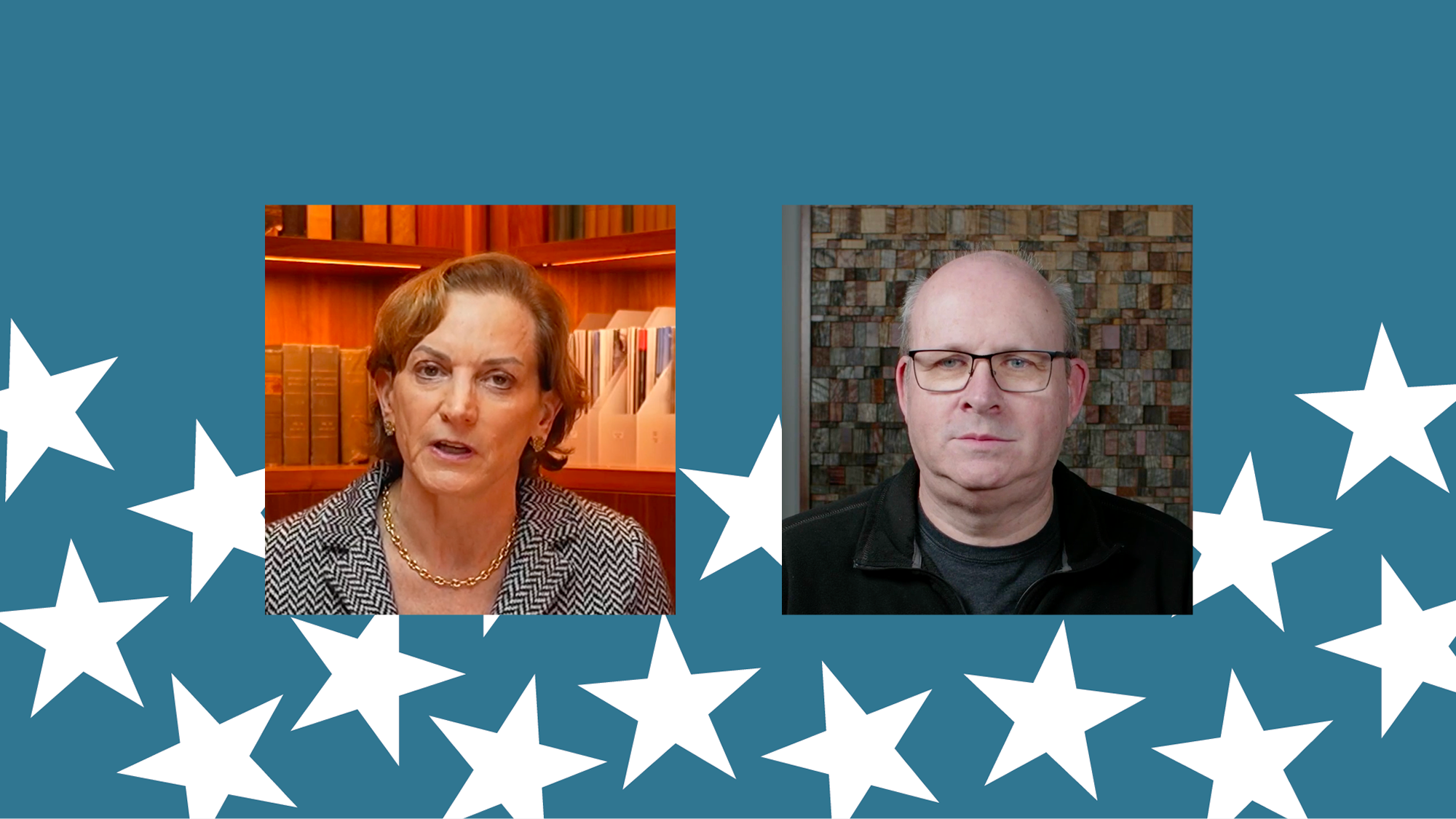
In this episode of Autocracy in America, the Democratic election lawyer and founder of Democracy Docket Marc Elias speaks about his work safeguarding the midterms, the continued threats to our democratic system, and why restoring the Voting Rights Act won’t be enough to solve our problems.
The following is a transcript of the episode:
Anne Applebaum: I’m Anne Applebaum. We’ve just had the most consequential midterm elections in modern history. Americans clearly voted for a different kind of government. But major change will require more than one election. In this season, we will ask what steps need to be taken to undo the damage the Trump presidencies have done to our political system and reverse the slide to autocracy, even as Trump himself remains in office.
At the center of any functioning democracy is the right to vote. A representative government is only truly representative if it somehow reflects the will of the people. The surest sign of a failing democracy, by contrast, is a flawed, manipulated voting process or one that always produces contested results. Americans have been trying to manipulate their voting system for decades.
The word gerrymander was invented in 1812 when then–Massachusetts Governor Elbridge Gerry drew a voting district that resembled a salamander. During the Jim Crow years, some American states wrote laws deliberately designed to prevent Black people from voting. Other states have tried to make it harder for students or poor people to vote by limiting polling stations or creating obstacles to voter registration.
But since the beginning of the second Trump term, the federal government for the first time became the most important source of voter suppression, not the states. Having urged supporters to attack the Capitol in order to block Joe Biden from becoming president in 2021, Donald Trump did his best to shape the result of these elections in advance.
He used government funds to make election advertisements. He sought to pass legislation that would make voting more difficult, and he tried to use the U.S. Postal Service to restrict mail voting by obliging the service to determine who receives a mail ballot. His Justice Department sued multiple states in an attempt to gain control over lists of voters, and they lost all of those suits.
To talk about the 2026 elections and to reflect on how we can build a stronger electoral system in the future, I have invited Marc Elias. He and his law firm have represented dozens of U.S. politicians as well as U.S. voters in cases involving campaign finance, voting rights, and redistricting. He’s also a strong advocate of voting rights and of high voter participation.
[Music]
Marc Elias, thanks for joining me.
Marc Elias: Thanks for having me.
Applebaum: Since the election, quite a few people have remarked on how smooth it seemed to be. There was no “Stop the Steal” movement. There were no overt attempts to prevent people from voting, as many had feared there would be.
I’d like to start by asking you about the work that went into that smoothness and into that success: What were people doing to prepare for the midterm vote?
Elias: So first of all, there’s no question we had a free and fair election. But I think it can be overstated that there were no obstacles for people to vote and that the government and other actors did not do things to try to make it harder to vote and easier to cheat. After all, we had an unprecedented effort by the Trump administration to actually prevent, among other things, mail-in voting, to try to prevent California from tabulating all of their ballots, to try to prevent Alaska from certifying the election results if a Democrat wins.
So the fact that those things failed are good for democracy, but I think everyone needs to keep in mind that those things were tried and didn’t succeed.
Now, in answer to your question, what we do, the way I think about preparing for Election Day is you try to solve the big systemic problems and then the small local problems.
What made 2026 kind of a unique election in that it was actually the federal government rather than the states who were posing some of the greatest risks to elections.
And then at a local level, we are involved in a lot of litigation and a lot of working with candidates and local election officials to try to remove the friction points. Those friction points can be long lines. Those friction points can be a surge in provisional ballots, in people having their polling places closed, and those things can make a real difference, not just to individual voters and obviously to communities, but also to the outcomes of elections.
Applebaum: And tell me what you were doing in Mississippi, because I know you were there in the days after the voting, or your organization was there. When you say you’re going down there to protect the vote, what are you doing? What’s necessary to do after an election to make sure the votes are counted correctly, and how can grassroots organizations or legal groups help?
Elias: Anne, I’ll be honest with you. In the 1990s, I picked up an odd specialty of close elections, which, at the time, did not seem like a growth industry. I was involved in Harry Reid’s recount in 1998. I was part of the legal team for Maria Cantwell in 2000, so I wasn’t in Florida.
I did Al Franken’s recount in 2008. I’ve done many, many post-election challenges. In 2020, I represented President Biden and the Democrats in defeating Donald Trump. So what the Elias Law Group, my law firm, does is we, in the post-election period, represent candidates.
In this case, we represented Scott Colom’s campaign, and him, in Mississippi to make sure that all of the remaining ballots to be counted after Election Day were in fact properly counted.
So in Mississippi—and this is a good example of the kinds of things that we try to head off before Election Day—they have fairly antiquated voting laws. They had a very large number of people who showed up to vote in person who were given what in the rest of the country we would call provisional ballots—in Mississippi they call affidavit ballots because they were not on the rolls.
Now, these are voters who had done everything right. They should’ve been on the rolls. It was not their fault. It was the fault of the state having removed them. So in the postelection period, there was a process, county by county, by which the counties went through those affidavit ballots and figured out which ones should be counted and which ones wouldn’t be counted, and we were there on behalf of the campaign.
I did not personally go, by the way, just to be clear. There were a dozen people from my law firm who were there. We are in a number of different jurisdictions, Mississippi being one of them, and we’ve had them in various House districts.
Applebaum: And when you’re checking the affidavit ballots, what does that mean? You’re talking to the people who voted, or you’re talking to the officials who are doing the counting?
What are you doing?
Elias: It depends on the state. So in Mississippi, the vast majority, the overwhelming majority—let’s say there were 20,000 of these ballots, okay? The overwhelming majority, like, 19,000 of them, were what we call “self-curing,” which means that it’s just a question of the election official finding the right information in the county rolls to count it.
So we were there making sure that nothing was missed, and that if there were judgment calls to be made, that we understood what the judgments were and could argue our position; then the Republicans would argue their positions. In other states, though, these are mostly non-self-curing ballots.
In other words, the voter actually has to do something. So in some places, the voter has to come in and certify their signature is correct. In some places, they have to come in and they have to show ID. And so in those instances, we are oftentimes reaching out to the voters and essentially helping them figure out: Why did they vote a provisional ballot? What was the thing that was missing that needed to be fixed?
And then we help that, and that is sometimes referred to as ballot chasing and curing. So that is also done in places where that is the dominant set of issues after Election Night.
Applebaum: I think it’s something pretty unique to American elections, actually. I don’t know that there’s a process like this that I hear of in Europe when there are European elections.
I don’t know whether it’s especially difficult to register to vote here or people get kicked off the electoral rolls here for more different reasons. I’m not sure what the explanation is.
Elias: The fact is, it is unusually difficult to vote in the United States, and there are a number of reasons why that is. Some of them are historic, having to do with the history of discrimination in voting that still permeates a lot of systems. But Anne, one of the reasons is—and this gets into the whole voter-ID debate—that we don’t have a national election system, and we don’t have a national voter ID card.
We don’t have a national voter-registration system, right? In most places in the world, and in some states in the country, if you move into the jurisdiction, you automatically get registered to vote. And if you then move to another county, you get reregistered to vote, right? It’s called “portable registration”—“automatic portable registration.” And we don’t have that in this country in most states, and we really don’t have it between states. So a combination of that, plus the fact that states have ID laws but there’s no universal identification document, means that there are more ways for voters to trip up.
In states in this country—like, for example, Minnesota, where they have same-day registration—you don’t have people having their ballots set aside because they’re not registered. Because if they’re not on the rolls, they just register right then and there. But we have a lot of states that have very antiquated laws, and Mississippi, unfortunately, is one of them.
Applebaum: It seems to me one of the big conclusions to draw from this election is that people are very fed up with the way American democracy works. If you were to talk about how this process might go forward if there were a movement or an impulse to reform, what would that look like?
Elias: Let me break that into two pieces. The first is that the Constitution gives states the power to set the time, place, and manner of elections. However, Congress can, through legislation, override most of those choices. So Congress could pass uniform legislation in this arena, and in fact, it has in some areas.
The reason why we all vote on the Tuesday following the first Monday in November is because Congress stepped in and said, Hey, states, this is the day for electing members of Congress and the president. (Laughs.) The reason why, for example, military and overseas voters are given certain rights to cast ballots in the way they do is because Congress stepped in and said, This is the way you have to do it.
So Congress could pass laws to do this. It is a little oversimplistic, but not much, to say that we’re in a world, from about 1965 to about 2008, in which there was a bipartisan consensus to make voting more convenient and to modernize elections.
I remember I worked on a committee to modernize elections, voter registration in particular, in the early 2000s, and it was bipartisan. There was no partisan valence to this.
What’s happened is that since then, the Republican Party has largely come to believe that it is better off enacting laws that make it harder for certain modes of voting to take place, because of what populations use certain modes of voting.
I sometimes say, “There is no such thing as a neutral voting law.” If you asked me to design a voting system that would make it more likely that Democrats would win, I could do that. If you wanted me to design a voting system, make it more likely that Republicans win, I could do that.
If you wanted more people in cities to win, I could do that. If you wanted more people in rural areas to win, I could do that. People are familiar with this concept around the drawing of district lines around redistricting, but that’s just one type of voting law. And so unfortunately, we have been in this cycle in which there is not a bipartisan consensus to modernize our election systems on a nationwide basis.
There are several proposals to do so. I think that there are more that frankly are going to be needed after this election that are unique to the situation that we now face.
Applebaum: Do you expect the change in state governments to be part of voting reform? There’s quite a few states flipped, not just at the congressional level, but at the state-legislature level.
Is that gonna lead to any kind of change?
Elias: I hope so. I have been an outspoken critic of our nation’s voting laws. And I sometimes say that if there is any Democratic-controlled state that thinks they can’t improve their voting laws, they should call me—’cause there is no state that could not improve the experience that voters have.
And unfortunately, there are too many states—because the people in power were elected under the laws as they are—that are just like, Well, what we’ve got is good enough. And so I would love to see a prioritization both at the state level, where Democrats control the process; at the federal level, I would love to see a prioritization of not just a reshuffling of some of the election rules and laws, but frankly a wholesale reevaluation of what the challenges are.
One of the proposals you will oftentimes hear, and I’m not opposed to it by any stretch of the imagination, is people will say we need to reauthorize the Voting Rights Act as part of reform. And to be clear, the Supreme Court’s gutting of the Voting Rights Act was atrocious and was a stain on the institution.
That never should have happened. But I would challenge folks that if in 2026—with all of the experiences we have had, with all of the threats that have come from Donald Trump—surely we can do more and do additional work to simply restoring a law that was meeting the moment in 1965. I’m not saying that we shouldn’t restore the Voting Rights Act, but it’s not sufficient to the moment we’re in, in which you have Donald Trump at least musing that Republicans should take over the vote counting, and the Department of Justice filing lawsuit after lawsuit to try to undermine states’ abilities to run free and fair elections.
I just think the medicine that we need at this moment has to be much stronger than what people have talked about in the past.
Applebaum: Let me ask you about gerrymandering. We saw for the first time the federal government involving itself in gerrymandering out of cycle, right? It was something that used to happen after a census.
Both sides did it, to be fair. Is there a world in which you could imagine either a national law or a norm that states began to follow where there were neutral forms of drawing state boundaries? I mean, other countries do it. Again, they do it in the U.K.; they do it other places, where they try to find, more or less, fair boundaries that represent real communities—towns or cities or villages.
They don’t divide them in half or draw long, thin lines on the map. Is that a possibility that you could imagine?
Elias: So first of all, constitutionally, it’s definitely possible. Congress clearly has the authority to pass a national law involving the criteria or the method or the timing.
I think it is essential, and it’s essential for a reason that is not often talked about.
You said something that is the common refrain that I hear, which is that both parties have always done it. When I got into law practice in the 1990s, what it meant to gerrymander was taking a physical map out of paper and laying it out on a big table, and then having a pencil and drawing lines.
Today what it means is entering all kinds of data into a computer that can then draw a million maps, literally a million maps, in the span of a couple hours and give you every iterative version. If you want it that it will favor “this” kind of candidate, it can draw a million maps that do that—if you want it to keep these towns together or those towns together.
So technology, frankly, Anne, requires us to tackle this problem. Because if we don’t tackle this problem, what the computing power is going to allow in the future is going to simply be impenetrable. I know that this cycle everyone says, Look, the gerrymanders are overcome by a wave.
I’m not an AI expert, but I have seen the growth of the ability of gerrymandering at a technological level to be not the same thing as what you are referring to when you say Democrats and Republicans have always done it.
Now, that said, Anne, the question of what reform looks like can be sometimes in the eye of the holder. Sometimes people talk about reform as they want essentially fair partisan representation. If a state is 55–45, they want the districts 55–45.
Other times they say, No, what we really want is competitive districts, so that whichever party wins, they capture a bigger slice of it. We don’t want 55 percent of safe Democratic districts and 45 percent of safe Republican districts.
We want 100 percent of competitive districts that can swing from election to election. There are also obviously considerations of minority voting rights, and how do you factor in the need to protect minorities in that system? You may say, Look, we don’t want just partisan considerations to control here. We also want to make sure that within parties, within the overall electorate—that, for example, Black voters in the Deep South have the ability to elect their candidates of choice, and it’s not just a partisan fight.
And that’s why these are not irreconcilable, but they do require having an honest discussion about what the trade-offs are between them.
Applebaum: Yeah, gerrymandering bothers me a lot because it’s the one thing that seems to me really profoundly undemocratic. In other words, if someone’s running for election, and we know he’s gonna win because his party is designed so that his party will win, then you begin to have either members of Congress or members of state legislatures who don’t really have to care about what voters think.
And this is how you get hyper-partisan politicians. This is how you get corrupt politicians, actually. Because if they’re not really worried about reelection because they’re gonna win automatically, then, it seems to me almost the most undemocratic thing about our political system. So anyway, I hope that—
Elias: And then, and then by the way, Anne, we’re seeing some suggestions in some quarters that we move away from single-member districts.
And we go to a proportional system. And we just say, Okay, you know what, Marc? We’re not gonna have districts in that state. Of the 10 congressional seats, candidates one through 10 who get the highest 10 votes will get the seats. Or they’ll run on party slates, and it will be based on the party share.
Which is—you are more familiar with the European system than I am. But looks more like that. Congress has a lot of authority in this area to decide if they want a uniform standard. And in fact—
Applebaum: So we could have some kind of proportional voting, at least within states?
Elias: Absolutely.
Applebaum: That’s interesting. I didn’t—
Elias: If the state adopted it or if Congress adopted it.
Applebaum: Let me ask you something else. Trump initially accepted the results of this election. I think on Election Night he said something about not challenging them, and then a few days later he started questioning the legitimacy of the outcome.
You started to see poking up here and there people questioning various results. Does this look to you like something ominous, something that’s gonna build the way, after the 2020 election, we saw the “Stop the Steal” campaign building? Is this a threat to the certification of these elections and the acceptance of the new Congress?
Elias: I don’t think it is a threat to the certifications. I don’t think it’s a threat to the new Congress. I do believe, and this is important, that we will see a growing election denial movement around the midterms in the way in which we saw it after 2020. We had an election. There were legal challenges to it that resolved themselves in favor of Joe Biden.
There were certifications that followed that were settled with very few disputes at the state levels. I mean, a handful here and there, but by and large, the certifications then followed.
And by the time you got to January 6, you had largely a discredited Donald Trump. What happened then was that frankly people like me, and I blame myself and others, we assumed, Well, the courts said these things and the states certified, and he was sworn in, and Donald Trump instigated a violent insurrection in the nation’s Capitol, and the national consensus will now be that there was a right side and a wrong side.
And what we have seen since then, Anne—and this gets more into your area of expertise about sort of authoritarian movements—is the use of that as a way of building a core ideology. And I don’t believe that there is any reason to think that that won’t now follow suit as a result of the 2026 election.
So people get sworn in, don’t get me wrong. But do I think that a year from now we will be talking about the “big lie” incorporating aspects of 2016, which it always did? Remember, Donald Trump set up a fraud commission after he won in 2016, and then obviously 2020.
Do I think we will have elements of it that include 2026? Absolutely.
[Music]
[Break]
Applebaum: Walk me through 2028. In 2028 there will be another presidential election, assuming nothing even worse happens. Then there will be another process of accepting it. How are you planning for that moment? One of the reasons I’m asking is ’cause I was very struck by the appointment of Jim Jordan, somebody who was a leader of the “Stop the Steal” movement, and Stephen Miller also, who’s now running the White House, also was an important part of the “Stop the Steal” movement.
So there are significant figures from that movement who now are gonna have a lot of power inside the Republican Party and inside the White House. How do you see them playing a role in the next couple years?
Elias: Jim Jordan is an election denier. Mike Johnson was an election denier. The judges who get put up, they’re not allowed to answer the question as to who won the 2020 election by saying Joe Biden, right?
But, Anne, I’m gonna say something more provocative that I believe is true and important that people start to accept: We are in a constitutional crisis.
There is a reluctance on a lot of people’s part to say we are in it. They want to say, We could be in it. We’re on the verge of it. We’re on the precipice of it. I just want to paint a picture for you, and you are an expert in foreign authoritarianism.
You have a country right now in which we had elections because the president of the United States was defeated when he weaponized his Department of Justice to try to intimidate election officials with the threats of criminal enforcement about how they counted ballots.
We had a free and fair election because the president of the United States tried to convert the U.S. Postal Service into a tool that would not deliver ballots. He is, as we speak, weaponizing the Department of Justice against his political opponents. And if there is ever any hallmark, I think, of an authoritarian regime, one of them is the use of the criminal prosecutorial state to try to discredit and jail or prosecute or harass political opposition movements.
We have seen that not just in the run-up to this election, but we’ve seen it since the election.
He continues to threaten Democratic senators. You have the Department of Justice and the White House and a U.S. attorney saying that if Congress does oversight investigations, they may be criminally prosecuted and investigated for that.
And so when I look at this—and you asked me about the 2028 election. We are in a world in which the executive branch is operating outside of not the norms, not the usual, but outside of the Constitution—just is routinely operating outside of the Constitution without an obvious way for that to be checked—and that is the definition of a constitutional crisis and that is not showing any sign of abating between now and 2028.
Applebaum: You represent Democrats, right? Your clients are Democratic campaigns or politicians or voting groups. How is it possible to make this argument that you’ve just made to me that we’re in a constitutional crisis? How do you make this argument in a way that doesn’t seem partisan?
Is there a way to rise above this kind of conflict and find a way of talking about elections—maybe a technocratic way, I don’t know, maybe a neutral way—that gets us out of this kind of cycle?
Elias: I turn the question back to you. When Péter Magyar was making these arguments, did you say he was a partisan?
When Alex Navalny was making these arguments, did you say he was a partisan? I mean—
Applebaum: No. So Péter Magyar was—
Elias: Who do you expect to make these arguments if not the opposition movement to the authoritarian regime? And in this country, that happens to include candidates who are running as Democrats and people who self-identify as Democrats.
It’s not only those. There are civil-society groups for sure, but it is a rather uniquely American phenomenon that we say, Well, we’re not going to accept that the opposition candidates and the opposition party has a voice in this because it makes it look partisan.
Applebaum: Actually, people did accuse Péter Magyar—that was the leader of the Hungarian democratic opposition who’s just recently defeated Viktor Orbán, who was their authoritarian prime minister. They did accuse him of being partisan, but he managed to make an argument that was designed to appeal over the heads of partisanship to all Hungarians whether they were going to vote for him or not. And the question is how Americans do the same: How do we make an argument that appeals to Republicans, that appeals to independents, that makes the argument for electoral reform an American argument?
Elias: Yeah. Fair question. The short answer is I don’t know. I know that there have been efforts to do that, and it is not the role I am going to play.
I don’t think I am going to be the most persuasive voice to Republicans, given how much vilification of me there has been. I have been targeted. The president has called me names. He’s called for my jailing. In another country, if the lawyer for a political party was—if the president was calling for their jailing on the eve of an election, you might actually say that that would be a hallmark of an authoritarian regime and a constitutional crisis.
So I’m not gonna be the most persuasive voice. What I know is that there are nonpartisan civil society groups that are trying to do just this. I know that there are former Republicans or even current Republicans who try to do this, and I cheer them on. I hope they are able to succeed.
I view my role as slightly different. I am trying to buy time for them. I am trying to, one election at a time, prevent the collapse of free and fair elections. I’m trying to make sure we don’t have a failed election, because if we have a failed election, it’s very hard then to put it back together.
So I feel like every two years I am trying to simply keep the trains on the tracks while others who have that space to do that work can do that work. ’Cause I agree, in the end, it’s not gonna be solved by brute-force politics. It’s gonna have to be a national consensus. To put it another way: The fever’s gonna have to break, and I’m not the doctor who’s gonna cause the fever to break. I may be the doctor who is keeping the patient alive while people figure out how to make the fever break.
Applebaum: Actually, Alexei Navalny’s lawyers are in prison. Not that long ago, I met the lawyer—he had been the lawyer for Sviatlana Tsikhanouskaya. She was the Belarusian presidential candidate whose election was stolen back in 2020, and he then spent several years in jail.
So yeah, I think it is a pretty strong hallmark of authoritarian regimes to lock up the opposition lawyers. (Laughs.) And actually, a third one: I was just in Venezuela, and I met Perkins Rocha, and he had been the lawyer for the opposition political movement in 2024 that was led by María Corina Machado, and he had just been released from jail.
And actually, he was still in his apartment under house arrest, wearing an ankle bracelet even months after [Nicolás] Maduro had been kidnapped and theoretically they were under some kind of new regime, which isn’t all that new. So you’re right. The lawyers very often are the focal point of pressure precisely because they can use this legal language to convince people.
So I take your point that you’re not a political figure and you’re not the one who’s gonna make the nonpartisan argument. But legal language, and even technocratic language, is often really important in these stories in convincing people, building support, creating the belief in the neutral institutions that make democracy work.
So democracy needs neutral electoral institutions. It needs independent courts; it needs independent media. It needs these neutral things in order to function. And lawyers are inevitably part of that.
Elias: I do try to explain in nonpartisan terms these are challenges that no one should face. And in fact, one of the criticisms that’s often made about me is—but from the right, which is not actually true—is they say, Well, you only sue Republicans.
Ask the state of New York what it’s like to be sued by me. I sued them because they banned food and water in line, and I sued them and I won, and I made them pay our attorney’s fees. I’ve sued the state of California. I’ve sued any number of Democratic secretaries of state and Democratic states over their voting laws, because I do believe that there should not be anyone—whether Democrat or Republican, rural, urban, Black or white—no one should suffer the indignity of not having the ability to vote or have their vote counted.
Applebaum: One of the other big issues in this election was campaign financing, the sense that billionaires and millionaires and people we don’t know are putting huge amount of money into campaigns and distorting the way they work.
And I think we’re now finally at the phase where even ordinary people know. I mean, people felt bombarded in Texas by the number of advertisements they saw. They knew some of it was coming from Elon Musk or from other billionaires. This has been a subject that past Congresses have tried to deal with.
They’ve been blocked by the Supreme Court. Is it hopeless? Is there a way forward legally or politically to solve this problem?
Elias: The Supreme Court in the 1970s, in a case called Buckley v. Valeo, laid out a fundamental structure for viewing campaign spending, and it basically said that money facilitates and is a form of political speech, and therefore you cannot limit the amount of money someone spends independently of a candidate because it poses no risk of quid pro quo corruption with the candidate, and therefore it’s just free speech. And just like you can’t prevent someone from marching on the National Mall and yelling that Donald Trump is a crook, you can’t prevent Elon Musk from buying a billion dollars of television ads and saying that James Talarico should lose.
That is the legal box we are in. I think we need to stop fighting the fight on the terms of Buckley. As long as those of us on the left are having this fight about whether money is corrupting or not corrupting, the Supreme Court is where it is.
I think we just have to say, You know what? That is, in fact, the wrong framework. The entire structure is rigged in a way to allow unlimited money in politics. And what I would argue should go in its place is, rather than centering the speaker, we should be centering the voter.
Because unlike other kinds of speech—unlike issue speech, where you’re trying to persuade elected officials—this speech is trying to persuade the voter. So what we should be asking ourselves is: What is useful? What is the thing that is going to make the voter in a better position to cast their ballot?
And if people think this sounds wildly unconstitutional, I would point you to the fact that the Supreme Court has carved out allowing there not being electioneering close to polling locations. You’ve all seen that. You go to the polls and there’s a buffer around the polling location in which there can be no campaign speech, there can be no campaign signs.
And that’s because the Supreme Court has recognized that there is this zone of sanctity around voting, that we need to allow voters to have a contemplative place that the courts have recognized. The Supreme Court has said that is an important aspect of democracy, that people, when they are casting their ballot, are able to reflect on the import of what they are doing as citizens—where they’re able to think about their choices and, in the voting booth, not be bombarded with messages. I think we should be extending that idea to this idea of unlimited spending in ads targeting voters or communications targeting voters, and it would allow for much greater regulation.
It might not go as far as some of the European systems, where I think some countries actually literally have cutoff periods. It may not be that continuing to just try to rehabilitate the existing jurisprudence is not gonna do the trick. We need something different, and I am proposing this idea of a voter-centric approach built on this idea that there is something sacred about people considering their choice of ballots, and we need to give them the space from the cacophony of voices.
Applebaum: And is that a task for Congress? Is it for advocates? Is it for lawyers? Who begins to push this idea?
Elias: Yes, yes, and yes. The money in politics is not just bad because of the impact it has on Elon Musk and Donald Trump.
I think people understand that. But it’s also bad because of the impact it has on people, on participating, on their willingness to vote, on their tuning out and cynicism—about politics, about them having accurate information rather than false information, about the issues and the candidates before them.
In the United States, people say, You can’t have a democracy without the First Amendment being exactly as absolutist as it is around elections.
That if you didn’t have Elon Musk able to do what he’s doing, you would not have free and fair elections. And I’m always thinking, Well, I think they have reasonably free and fair elections all over the world without this.
Applebaum: I would go even further. I don’t think there’s any other democracy where money plays such a huge role in politics.
And actually, yes, quite a number of European countries do have limits. You can spend X amount of money. I’ve cited this one before. My husband ran for the European Parliament, and his spending limit was 35,000 euros. Maybe it was 30,000. Anyway, it’s between 30,000 and 40,000.
And when I say that in rooms in the United States, people laugh. You know, Oh, that’s ridiculous. But no, actually, that was the limit. (Laughs) And for that you can buy some posters. You can buy a little bit of stuff on Facebook, and that’s what everybody has. And so it’s a fair election because everybody’s spending the same amount of money, and nobody can outspend you.
And somehow you manage to have a campaign and inform people and move on. You can still say whatever you want in your ads. You can still write whatever you want on your posters, but what you don’t have is a huge role for donors. And this is the thing that U.S. politics has that no other country has or few others. I don’t think any European countries have it. I can’t speak for every democracy on the planet, but the fact that every member of Congress has to have some relationship with donors or with people who give money, and some of them take PAC money, and some of them don’t.
It doesn’t matter. Everybody has to have money for the next election campaign, unless they’re in one of these gerrymandered safe seats, I guess. And that means that you’re a member of Congress—you gotta have a million dollars every two years, and that means you have to spend a lot of time with people who give you money.
If you’re a senator, you now need tens of millions of dollars, and that means you have to also spend even more time with people who will give you money. It’s not necessarily a corrupt relationship always. It’s not necessarily pay-for-play, exactly, but it’s a distortion of people’s time, and it’s a distortion of the way politicians have to think.
They have to think like fundraisers rather than focusing their effort on: What do my voters want? How do I deliver it? What’s the best law?
Do you feel the mood around this changing? Because I do. I just hear people saying it and talking about it, and there was something about the scale of the spending in these midterms, too, that seemed especially out of line for midterm elections, for Senate races, for primaries.
Elias: I do. I think that for a lot of people, data centers is a democracy issue. People are really concerned about the data centers as part of a concern about their ability of them as members of community to have a say over the policies in their communities.
Applebaum: We talked about what diminishes voter turnout, what represses the vote, but what would help promote voter turnout? What are the legal changes? If you were to make a list of things that would encourage people to vote more, what would be on the list?
Elias: There are a few big things and a few small things. Number one, I think we need to allow people to vote the way they want to vote.
There are people who want to vote by mail. We should let people vote by mail. We should make voting by mail really easy. We should have there be drop boxes. We should prepay postage for people who do it. We should make sure ballots postmarked by Election Day count if they come in a few days afterward.
We should make it easy to them to get a mail-in ballot and to send it back. We should not require wet signatures, which means that young people who oftentimes don’t sign papers but digitally scan something in or go on the internet. There are a lot of things we could do to make access to voting easier.
Some people want to vote in person. Let them vote in person, right? Let them vote early in person. I am kind of a “all of the above,” so that’s one thing.
The second is our voter-registration system is literally of a different era.
There is no reason why we have this complex voter-registration system. We have, with computers and e-poll books, the ability to know that if someone registers in one place and votes in one place instantaneously, that they can’t register and vote someplace else. So we ought to do away with preregistration requirements.
People should be able to show up and register and vote in person. We should make a pledge and a guarantee and fund elections as needed to do away with long lines. One of the biggest reasons why people don’t vote is because of lines. And every time there is a long line—and I see the media celebrate it as a sign of democracy—I say, Well, how would you like to wait in line for an hour?
It’s not a celebration of democracy; it’s a failure. I have promoted—and this has not been adopted anywhere, but I’m quite serious about it—we should pass a federal law that says that no voter waits in line for more than 30 minutes to vote, and if they do, the government pays the voter for their time.
We have this with airlines, or at least we used to, I think, until it got gutted recently. But the fact is that if you wait in line for an hour, the county should have to pay you for the time that it took you to wait in line ’cause they failed you. They are in the business of making sure you can vote.
And this brings me to the last thing. We need a voter-centric jurisprudence and a voter-centric understanding of voting. Voting laws don’t exist for the convenience of election officials. There are a lot of people, including my friends in the reform community and on the left and in the Democratic Party, who celebrate the election officials.
I celebrate the voters. So the courts should be adopting a jurisprudence that treats voters and their inconvenience and their suppression as the most important thing in election cases, not the administrability, not the Is it too late in the election cycle?
But it’s kind of what you were saying about redistricting—what’s kind of behind your sense that gerrymandering is wrong. It’s the idea that the voters are sort of afterthoughts in the process, and it should be the other way around. They should be centered.
And I’d like to see the centering of voters in the way in which courts apply law. It would have a huge impact on gerrymandering, by the way, but it would also have an impact on voter-registration laws and these affidavit ballot laws and the college students who can’t have polling locations at their schools. All of those things would get thrown out because they’re anti-voter.
And we would not be trying to balance, Well, yes, but it’s inconvenient for the state or, The state doesn’t like this or like that or, The election officials don’t have enough staff.
And so I think that is where we need to go in any future reform legislation. It’s what I’d like to see the left adopt as a unifying theory of both voting rights, redistricting, and campaign finance, because I think it would actually center the debate about democracy where it should be, which is not on the candidates, not on the election officials, but on the people who we are actually trying to get participating.
Applebaum: It would also solve another problem in the United States, which is that I feel that for different reasons, Americans right now feel this lack of agency.
So their lives are organized by algorithms on the internet, which show them stuff whether they wanna see it or not. And data centers are built in their communities without their input. And so many things seem to happen very quickly without them being able to affect anything. And one of the—always the causes of decline in democracy is when people feel it’s pointless. You know, My vote is pointless, or my action is pointless, or I don’t have any power in the process.
But you’re right that giving people the sense that, We want you to vote and your vote is important, and here, we’re gonna make it easier for you—it doesn’t solve all the problems, but it’s one way of making people feel that citizenship is important and it’s an important part of what you do and who you are.
Elias: Absolutely. If you look at exit polls, the second-most motivating issue for voters in this election was the state of democracy.
It followed the economy. It was above health care, immigration, and other things. And you cannot understand the public’s high prioritization of data centers or the Epstein files, which were two of the most salient issues in the election.
Neither of those were economic. I mean, neither of them are primarily economic. Both of them are a sense that there are these group of people for whom the rules don’t apply, and they can just do whatever they want to your community. They can do whatever they want to young girls. They act with impunity, and that you as an individual are powerless. And in order for a democracy to work, there has to be a way that people can feel like by voting, it changes the material conditions of their lives. It changes the policy outcomes they experience.
And I think that the data-center debate very much is about the disconnect of communities feeling like they have that power from elites who act like they don’t have that power.
Applebaum: Marc Elias, thank you very much.
Elias: Thank you.
[Music]