The Epstein Election and the End of MAGA
· The Atlantic
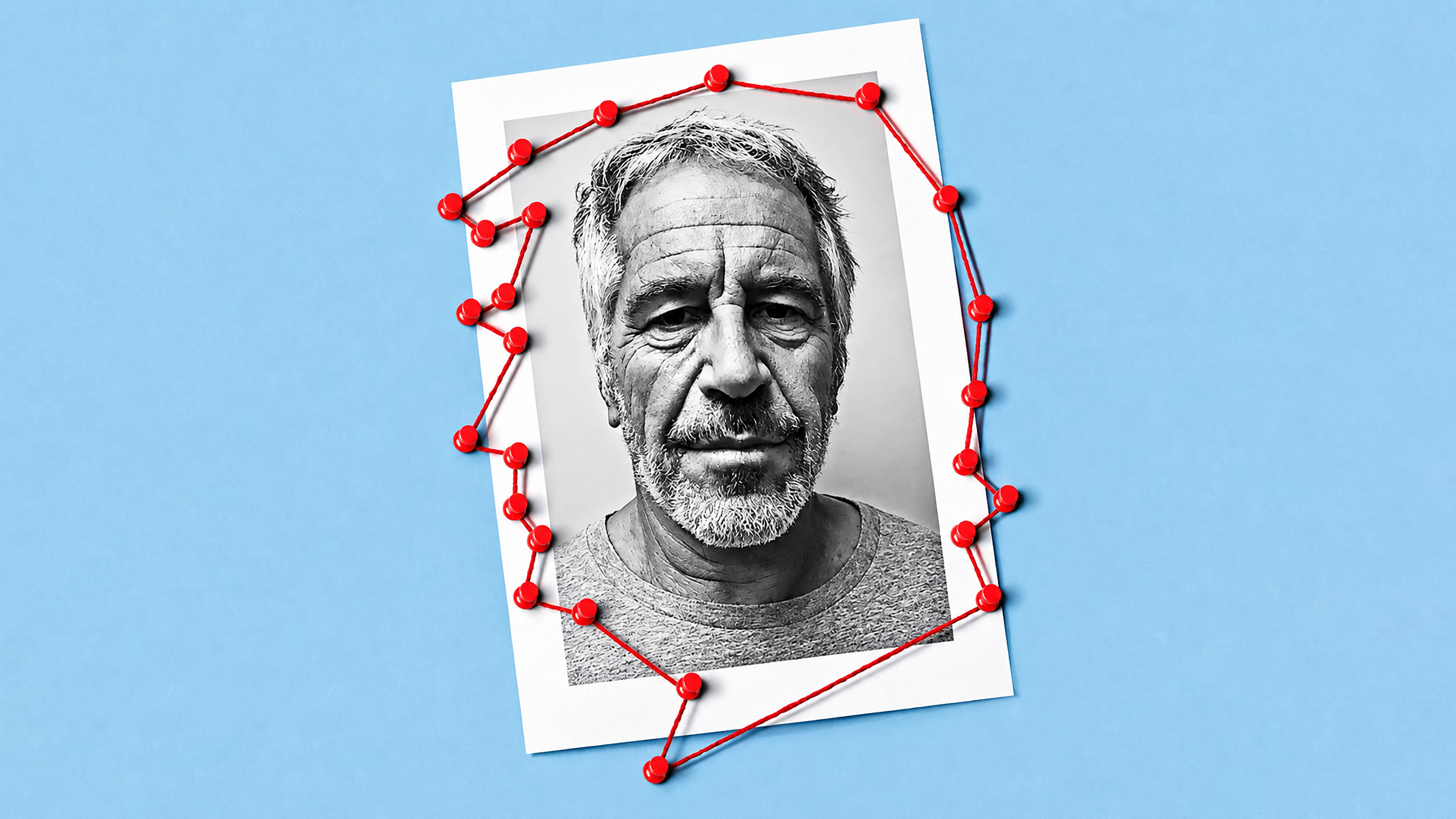
In the final weeks before the midterms, the name Epstein was everywhere—in political ads, in stump speeches, on T-shirts at campaign rallies, and even in a scandal on The Real Housewives of New York City. Two years ago, invoking Epstein was a winning part of the Republican playbook. This time around, not so much.
Visit h-doctor.club for more information.
As Donald Trump ran for reelection, he told voters that his administration would release the Epstein files and filled its ranks with people who had fanned lurid interest in the case, including Kash Patel, Dan Bongino, and J. D. Vance. But then, once in office, they botched the process, turning off voters who had been essential to Trump’s movement.
The president’s decision to go to war with Iran and the resulting spike in gas prices may have been the front-of-mind issues for most voters in the 2026 midterms. But members of Congress, pollsters, political operatives, and campaign staff all told me that Trump’s mishandling of the Epstein issue meaningfully contributed to the GOP’s drubbing. The Republican pollster and strategist Brent Buchanan told me that Epstein became “a proxy for corruption” in the midterms. Another Republican close to the White House described the Epstein issue to me as the “nuclear fuel” that accelerated a new form of American populism. First, it boosted Trump. But on Tuesday, it worked against him, helping bring him to the lowest point of his presidency. Many of Trump’s voters viewed his handling of the matter as a betrayal. Pollsters told me it had cracked the bond between Trump and his coalition—and changed the course of the midterms.
Florida Governor Ron DeSantis said at a news conference Wednesday that the midterm election was as “close to an extinction-level event for Republicans in many parts of the country as we have seen probably in the last 100 years.” Among the causes for catastrophe, in DeSantis’s view: The party should have voted to release the Epstein files sooner.
The reluctance of Republicans in Congress, and Trump himself, to do so was the stuff of Democratic-campaign messaging throughout the fall, with candidates and super PACs spending tens of millions of dollars on Epstein-related ads. In Texas, James Talarico boasted, “I’ve never given a sweetheart deal to a pedophile.” In Georgia, Jon Ossoff’s campaign charged that his opponent had “protected powerful elites” by voting against the Epstein-files disclosure. In Ohio, Sherrod Brown accused his opponent of taking “the most money from associates of Jeffrey Epstein”; in Maine, a Democratic-aligned super-PAC ad alleged that Susan Collins had “voted with Trump to cover up the Epstein files.”
[Read: Susan Collins didn’t have a chance]
For Republicans, the impact of the “Epstein issue” in the 2026 midterms is a source of frustration and embarrassment—and was often described to me as an unforced error, especially given how the subject had first entered the political consciousness. Epstein immediately became fodder for conspiracy theorists after his death in a New York prison in 2019. In December of 2021, then–Senate candidate Vance posted a conspiratorial question to his Twitter followers: “What possible interest would the US government have in keeping Epstein’s clients secret? Oh…” In a 2023 podcast interview, the future FBI Director Kash Patel asked, “What the hell are the House Republicans doing? They have the majority. You can’t get the list?” He said, “Put on your big-boy pants, and let us know who the pedophiles are.” Six months later, then-candidate Trump said in an interview that he would release the Epstein files—a stance that won him widespread praise on the right, particularly among people who don’t usually engage with politics.
But that promise meant very different things to different audiences. Epstein was indicted in July 2019 for creating “a vast network of underage victims for him to sexually exploit.” He died by suicide a month later while in custody awaiting trial, leaving behind a long list of unanswered questions. Those he abused, and others who followed the case, wanted to understand who else had known about Epstein’s crimes without reporting them, and how he had escaped justice for so long. And they wanted to hold to account those who had enabled him. They expected to find answers to these questions in Epstein’s emails, his personal papers, and the investigative files of law-enforcement agencies.
But others thought they already knew the answers to these questions. Victims’ allegations that Epstein had trafficked women to other powerful men led them to believe that Epstein had engaged in blackmail—and that the government was covering it all up, as Vance implied. They thought that Epstein had kept a list of such men, the so-called client list to which Patel referred. They believed that some of the world’s wealthiest and most powerful men were on that list, and that releasing the Epstein files would reveal that people at the highest levels of government were covering up for elites engaged in a secret child-abuse ring. And they suspected that anyone who declined to produce evidence to substantiate their theory was participating in that cover-up.
But the idea of releasing the files, so simple in theory, became far more complicated once Trump, Vance, and Patel took office. In February 2025, Trump’s first attorney general of his second term, Pam Bondi, was asked by Fox News about the supposed Epstein client list and replied that it was “sitting on my desk right now to review.” Then the White House promised bombshells when it distributed binders labeled The Epstein Files: Phase 1 to right-wing influencers. (Nearly all of the material was redacted or already public.) In July 2025, the administration abruptly changed course with little explanation. That month, the Department of Justice and FBI released a memo saying there would be no further Epstein-related disclosures and there was no basis for further investigations or charges. The memo was unsigned, a person familiar with the memo told me, because there was no one within DOJ’s or the FBI’s senior leadership who would agree to put their name to it.
The Republican political strategist and former Trump-administration official Matthew Bartlett told me that the Epstein files were, for a time at least, a rare bipartisan political issue. Republicans believed that the files would incriminate Bill Clinton and other prominent Democrats. Democrats thought the same about Trump. But some figures in the administration promised far more than they could deliver, feeding conspiracy theories that were never going to be proven. “Some of them were shameful in their statements and allegations, and then came up with nothing,” Bartlett said. “That planted the seed of distrust.”
Shortly after the DOJ/FBI memo was released, the president issued a Truth Social post addressing what he called “The Jeffrey Epstein Hoax,” which he suggested was being perpetrated by Democrats. “My PAST supporters have bought into this ‘bullshit,’ hook, line, and sinker,” he wrote. Trump ended his post by declaring, “I don’t want their support anymore!”—a comment that some of his onetime supporters told pollsters and focus-group moderators only increased their suspicions.
White House officials and others close to the president cite the explosion of the Epstein story last summer as the first moment that threw Trump 2.0 off its stride. Until then, his second term had been a veritable steamroller through Washington. But the chatter around the scandal—including from some Republican loyalists—rattled the White House.
Later that year, Trump sought to block Congress from voting to release the files—and relented only when he realized that enough Republicans had defected to join Democrats in supporting the legislation to pass it. The Justice Department subsequently released millions of documents, but the process was hasty and error-filled, and it hasn’t quieted suspicions that the government is covering for people in high places. Lauren Bis, a White House spokesperson, told me in a statement that “President Trump has done more for Epstein’s victims than anyone before him.”
Multiple Republican pollsters and operatives told me they viewed July 2025 as the first step in the unraveling of the MAGA coalition. “That is the beginning of that bond breaking,” Rich Baris, the director of Big Data Poll, told me. First it was the Epstein files, “and then you follow it up with the Iran war, and it’s just a devastating one-two punch.”
[Read: The simple message that produced a Democratic landslide]
Democrats’ invocation of Epstein—and adoption of the Epstein class as an epithet to describe their opponents—has proved an effective tactic. Over the past year, Democrats have used the term to encompass broader Republican political vulnerabilities: high prices, corruption, and a lack of trustworthiness. A review of political advertising from this cycle shows that mentions Epstein appeared in at least 79 federal and state races across 26 states. AdImpact identified at least $76 million in spending on ads mentioning Epstein, overwhelmingly from Democrats in competitive races.
AdImpact estimates that Republicans have spent $3 million on Epstein-related ads as of late October, and the final weeks of Republican ad buys reflect GOP candidates trying to turn the issue around on their opponents, often pointing to Democratic donors whose names surfaced in the Epstein files. In Alaska, the Senate candidate Dan Sullivan said in a TV ad: “I voted to force Trump’s DOJ to release the Epstein files, while Mary Peltola took huge checks from Epstein’s associates.” In Georgia, during a mid-October debate, Ossoff’s opponent, Mike Collins, declared, “This call is coming from inside the house. And the Epstein class is onstage right now. And it’s you.” The National Republican Congressional Committee spokesperson Mike Marinella told me, “Americans have been disgusted by the level of self-serving corruption that spread like herpes through the slimy politicians who run the Democratic Party while getting bankrolled by Jeffrey Epstein’s best friend, megadonor Reid Hoffman. Voters see through the facade, and they know Republicans are cleaning up the rot left behind by Democrat leaders.” (Hoffman has denied knowledge of Epstein’s crimes and has called for further transparency by the government.)
Democrats have won this time, but they now face a new challenge. Once they control both the House and the Senate, they will be expected to deliver on their accountability promises despite a DOJ and FBI that have been unwilling to pursue Epstein-related investigations. A poll by Data for Progress, a left-leaning firm, found that 72 percent of voters wanted DOJ and the FBI to do more related to Epstein, though 45 percent did not believe any Americans would actually be arrested.
Representative Jamie Raskin is expected to become the chair of the House Judiciary Committee when Democrats take the majority next year. While in the minority, Raskin’s team has devoted substantial resources to Epstein-related investigations, culminating in a 52-page staff report released last week that called on DOJ to appoint an independent special counsel to conduct additional criminal investigations into Trump’s relationship with Epstein—and accused Trump’s DOJ of suppressing evidence. Raskin told me he and other Democrats plan to focus on pressuring DOJ to release the roughly 2.5 million remaining Epstein-related documents still believed to be in DOJ’s possession, as required by law, and demanding that potential crimes be investigated. (A DOJ spokesperson has said the department has released all of the documents required and that the remaining files are nonresponsive to the Epstein Files Transparency Act. The remaining files are the subject of multiple civil lawsuits.)
[Read: The Epstein emails show how the powerful talk about race]
Raskin acknowledged that with an administration that appears unwilling to respond to congressional subpoenas, there was a substantial risk of not being able to deliver on voters’ expectations, calling it both “a great responsibility” and a “very serious challenge.” California Representative Ro Khanna told me that Democrats expect those who campaigned on the Epstein issue to follow through once they’re in Congress: “The people who are winning on this issue are really going to have to be leaders on issues of sexual trafficking and assault and accountability more broadly,” he told me.
Democrats on the House Oversight Committee put out a press release Tuesday night stating that as incoming chair, Robert Garcia would take on “the Trump Crime Family, corporate corruption, DHS and ICE abuses, and the cover-up of the Epstein files.” Garcia’s own statement was only two words: “Lawyer up.”
But even if Democrats secure the release of all of the remaining documents, they may face their own version of the current Republican bind. Their aggressive rhetoric is raising expectations that they may not ultimately be in a position to fulfill. And unless those documents bear out the darkest and most conspiratorial theories about Epstein, Democrats may be left trying to convince voters that they aren’t also part of the cover-up.
Last month, I met with a small group of Epstein victims and their advocates who had gathered in New York for a ceremony in which Virginia Roberts Giuffre posthumously received an award for speaking out about Epstein’s abuse. (Giuffre died by suicide in 2025.) The midterms were less than two weeks away. The women described the frequent Epstein ads and references to their abuser in stump speeches as surreal. They were candid about the personal costs of their private trauma becoming a political tool, including the therapy bills and mounting credit-card debt to cover the costs of travel to lobby members of Congress. Other victims have told me they have taken on multiple jobs or relied on donations and food banks to feed their children.
Giuffre’s brother Sky Roberts told me that his sister’s experience with Epstein was ultimately the product of a political and judicial system that failed her and other victims. “It’s not political, but it is the political state that got us here today, blue and red, and there are just as many Democrats in there as there are Republicans in the files,” he told me.
Roberts said he remains hopeful that both parties will continue to pursue transparency efforts to prevent future abuses. He described a meeting with Republican House Oversight Chairman James Comer that surprised him—and gave him confidence. “I remember him sitting back in the chair after listening to the survivors and to our family, and he goes, ‘I have daughters,’” Roberts recalled. “And immediately he flipped, like there was this switch.” Comer’s committee has conducted more than a dozen depositions and interviews, obtained information about Epstein’s bank accounts, referred two individuals to the DOJ for investigations, and held the Epstein associate Leon Black in contempt of Congress.
The families of victims told me they never got into this to be agents of one political camp or another. “If somebody abused your daughter or your sister,” Roberts told me, “you wouldn’t ask first if he was a Democrat or a Republican.”
Jonathan Lemire, Marie-Rose Sheinerman, Madison Hahamy, and Jack Rodriquez-Vars contributed reporting.