Lula Is in Danger of Losing Brazil’s Presidency
· Jacobin
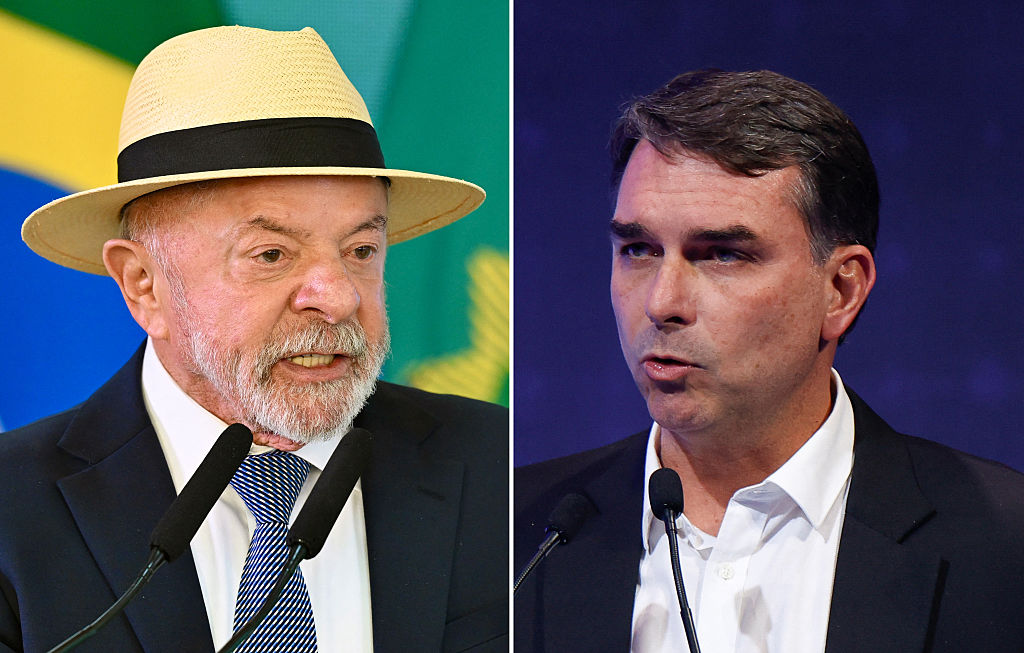
The first round of Brazil’s elections dealt a heavy blow to the Workers’ Party (PT) and, more broadly, to the cause of democracy in Latin America. In 2022, Luiz Inácio Lula da Silva finished some six million votes ahead of Jair Bolsonaro in the first round, a margin that narrowed to about two million in the runoff. This time, Flávio Bolsonaro finished 2.2 million votes ahead of Lula, a lead of three percentage points.That makes the second round on October 25 especially difficult for Lula and the Brazilian left. The candidates who finished behind the top two, who together took around six million votes (roughly 6 percent), are all on the far right. They supported Jair Bolsonaro’s government and opposed Lula’s, so a broad front is likely to form against him in the runoff. There is a real chance that the Bolsonaro family will return to the presidency.Right-Wing MomentumThe same dynamic shaped the legislative races. In the Senate, Bolsonaro’s far-right Liberal Party (PL) grew from fifteen seats to twenty-eight, while the PT held steady at nine (out of eighty-one in total). Hopes for a larger female presence in Congress also went unrealized.The gubernatorial races told a similar story. Sergio Moro, the far-right senator who jailed Lula in the wake of the parliamentary and judicial coup against Dilma Rousseff, won the governorship of Paraná in the first round. The far right also won outright in wealthy states like Santa Catarina and Rio Grande do Sul.In the Chamber of Deputies, Brazil’s lower house, the PT fared especially badly in São Paulo state, where veteran party figures such as Paulo Teixeira, Nabil Bonduki, and José Dirceu failed to win seats. The PT’s top candidate in the state, Luana Zaratini, received 230,000 votes, while the PL’s top candidate, Luciano Pavanato, received three million.Nationally, the left-wing parties with parliamentary representation — the PT, the Party of Socialism and Liberty, Rede, and the Communist Party — grew from eighty-eight deputies to ninety-six. But they were outpaced by Bolsonaro’s PL, which jumped from ninety-nine to 120 (out of 513 in total).When Bolsonaro was first elected, in 2018, the general mood was one of revolt. The far right rode into office on an enthusiastic movement from below, one that filled the streets. This has not happened with Flávio this year. Despite the PL’s electoral success and the strength of Bolsonarismo in the ballot box, the streets are lukewarm. The promises sound less like a plan to overturn everything, as in the previous campaign, and more like one to resume the Right’s unfinished work, especially amnesty for the family and revenge against the Supreme Court. The movement now coming from above might be more dangerous than the one coming from below.American InterferenceContrary to expectations, US intervention did not take the form of noisy meddling by Donald Trump and his allies. It appears to have come instead through effective background pressure on the Federal Police and the Supreme Court, which became the center of the political debate.This proved particularly damaging. Rather than debating questions of policy and program, the campaign revolved around corruption, the far right’s favorite terrain. And this time, the debate centered more on the Supreme Court than on the presidency.The first thing Washington did after Jair Bolsonaro’s arrest was to apply the Magnitsky Act, imposing sanctions on the magistrate responsible for the case, Alexandre de Moraes, to punish him for going after Trump’s main ally on the continent. The pressure on the Brazilian judicial system has continued ever since, less visibly but with greater aggression.The court’s own conduct made it an easy target. Its justices have a record of protecting bourgeois interests, and the line between public and private affairs is poorly drawn: justices commonly become multimillionaire lawyers once they leave the bench.This is the story of the Banco Master scandal. Judges and, above all, their relatives were tied to multimillion-dollar contracts, favors, gifts, and Epstein-style parties organized by the fraudulent banker at the center of the biggest financial crime in Brazil’s history. Among them was Moraes’s wife, Viviane Moraes. Five of the court’s eleven justices were implicated, yet the crisis revolved around Moraes, and the far right used it to attack the figure who had put Bolsonaro behind bars.The key question about the revelation of Viviane Moraes’s secret deals is how Justice André Mendonça, a far-right evangelical preacher with close ties to the US evangelical right, got access to the confidential documents. The manner, the speed, and the access enjoyed by this Bolsonaro appointee strongly suggest that there was US interference in the process.During a heated Supreme Court session broadcast live on television one month before the vote, Moraes said the report had been drafted in a time frame of seventy-two hours and insisted that time frame was impossible for a document of that kind. According to him, the metadata proved the report had not been produced by the Federal Police at all but by outside agents, likely foreigners, who simply handed the final product to the police.The metadata, Moraes insisted, showed that the police inquiry was opened and closed on the same day on a Federal Police computer, meaning the report had merely been inserted into it. He described this as evidence of attempted foreign interference in Brazil’s elections.Mendonça also intervened during the offensive against Moraes by ousting the chief of the Federal Police, whom Lula had appointed and who had been responsible for containing the January 8, 2023 coup attempt. Probable US intervention in the controversy over the Supreme Court shifted the terms of the debate to the advantage of the Brazilian right, in contrast with the punitive tariffs Trump imposed after Bolsonaro’s imprisonment that merely increased support for Lula. This time, the focus was not on the action taken by the Trump administration but on the allegations of corruption among judges who had backed the Lula government.A Weak GovernmentWhile the focus on the Supreme Court certainly made things easier for Bolsonaro, it is impossible to ignore the fact that Lula’s third government has been the least transformative of his three terms. This is partly explained by how Brazil’s institutions have evolved since the coup against his successor, Dilma Rousseff.The coup against Dilma was both a coup by parliament and a coup for parliament. The conservative right in Congress toppled her to install one of its own leading figures, Vice President Michel Temer, in the presidency. At the same time, it also sought to weaken the executive and strengthen the legislature, while the process also empowered the Supreme Court at the presidency’s expense.As a result of these efforts, Lula’s ability to govern has been greatly restricted and depends far more on Congress, including on matters like the budget. Under Bolsonaro, Congress took a direct institutional hand in writing the budget and directing public spending autonomously, in a way never seen before, and that practice has continued under Lula. According to political scientist André Singer, Brazil has moved from a presidential system built on broad parliamentary coalitions to something closer to a semi-presidential postcoup regime.But the weakening of the presidency does not in itself explain why the PT did so poorly. The government has relatively little to show in terms of improving the lives of the working class. It is true that unemployment is lower than ever, while levels of hunger have been reduced to the benchmark of Lula’s earlier governments, after rising sharply under Temer and (especially) Bolsonaro. But while life has largely returned to its pre-pandemic form, conditions remain very hard for working people.In the final Quaest poll before the election, voters in households earning up to twice the minimum wage (about US$620 a month) backed Lula over Flávio by 52 percent to 23 percent. That group has seen life improve as extreme poverty fell after the pandemic.However, this was not enough to offset the PT’s losses elsewhere. Among households earning two to five times the minimum wage, Flávio led narrowly by 36 percent to 35 percent. Among those earning more than five times, he led by a wider margin, 42 percent to 30 percent.While hunger has fallen, food prices have continued to rise, albeit to a lesser extent than under Bolsonaro. The quality of food has declined, with more semi-industrial products and higher prices for meat and other staples that were far more accessible before COVID-19. The availability of meat matters in particular: it played a central role in Lula’s 2022 campaign.Employment tells a similar story. Unemployment is down, but work has become harder. Temer’s administration stripped away a series of labor rights, and none of those rights has been restored under Lula. Jobs under PJ (pessoa jurídica) contracts, which cover individual freelancers and sole proprietors, have grown at the expense of formal employment, bringing far greater insecurity. Much of the job growth has come in service sectors tied to apps and digital platforms, where poor conditions and a lack of protections have made life worse.DebtDebt is a particular problem. Working-class indebtedness has grown, and this is especially relevant for the PT and for Lula, because the party’s governmental strategy has been to expand the capacity of families to take on debt. When it came to transport, for example, the main strategy was to widen access to car purchases through credit, rather than invest heavily in public transit.There was a huge expansion of access to housing for those earning one to five times the minimum wage. But almost all of it came from subsidizing private housing through the Minha Casa, Minha Vida program, which widened access by pushing people into debt. Public universities expanded, but the largest growth was in private institutions, through grants and financing schemes that also meant taking on more debt.In other words, the gains of the Lula and Dilma governments rested on greater access to goods like cars, housing, and education, bought with increased household debt. More than two decades after the launch of policies that sought to integrate the working class into mass society through consumption, 80 percent of families now carry high levels of debt.The Left and the Mass MovementsEfforts to avoid conflict with Congress, the Supreme Court, and Brazil’s capitalist class also made it harder for Lula’s government to deliver on its campaign pledges. While devastation of the Amazon jungle was reduced, Lula made drilling for oil off the mouth of the Amazon River one of his priorities after taking office, posing a serious risk of spills along the Amazonian coast.His government also announced a plan that would have placed strategic stretches of the Madeira, Tapajós, and Tocantins rivers in the National Privatization Program, with the aim of turning them into export corridors for soybeans. It was mobilization by indigenous and student movements during the COP30 protests in Belém do Pará that stopped the project.The early supporters of this abortive scheme included Guilherme Boulos, the minister in charge of the presidential general secretariat and relations with social movements, and Sônia Guajajara, the minister of indigenous peoples. Guajajara won 160,000 votes in the 2022 elections; this time, she received just 54,000.Most telling was the government’s failure, or unwillingness, to convert workers’ struggles into mobilizations in its favor. The central working-class demand since Lula’s election has been for an end to the 6x1 schedule (six days of work followed by one day off) and a reduction of the working week. However, the PT channeled this demand into a purely parliamentary fight with no strikes or street protests to back it up.The same demobilizing logic applied to the app workers’ strike (the breque dos apps), perhaps the most explosive moment of working-class struggle in São Paulo during recent years. While the government moved to head off the strike, the only proposal it offered these workers was credit to buy bicycles.Foreign PolicyIn terms of foreign policy, Lula’s government never developed a coherent line of opposition to the policies of the Trump administration. It did not follow through on threats to directly tax American goods and preferred to negotiate with Washington over its invocation of the Magnitsky Act.In relation to Palestine, Lula did put forward an early condemnation of Israel’s genocide, and his government joined South Africa’s genocide case at the International Court of Justice last year. However, the administration also used the human rights ministry to counterbalance its relationship with Tel Aviv. Silvio de Almeida, the human rights minister who left the post amid sexual harassment allegations, refused for months to condemn the genocide, saying it was a matter for the president and the foreign ministry. His successor, Macaé Evaristo, steered the ministry toward a policy of “combating antisemitism” that involved visiting Jewish institutions, the Holocaust museum, and pro-Zionist synagogues while ignoring the Palestinian community and taking no stand against Islamophobia.The government’s response to the failed Bolsonarist coup was also inadequate. It supported the Supreme Court while it declined to pursue important targets such as the Argentine Fernando Cerimedo, who is linked to US and Israeli interference networks in Latin America and was removed from the attorney general’s final indictment, and Jovem Pan, the major media outlet that called for the coup attempt.Winning the RunoffLula’s most popular moves in the run-up to the election involved changing his administration’s previous positions on those issues. His government had previously tried only to regulate the growth of online betting, which has hit working-class households hard, football betting above all. Now it moved to ban it altogether. Payments under the Bolsa Família scheme, designed to reduce poverty and extreme hunger, had not been increased to take account of inflation over the previous three years. This changed on the eve of the vote.The government also began investing in public health against obesity by buying treatments such as Mounjaro, having previously failed to do so. These policy shifts boosted support for Lula and may even have prevented Flávio Bolsonaro from winning outright in the first round.If Lula is to be reelected in the runoff, he has to generate hope of change. This has been the central problem of the Brazilian left. Banks, big business, most politicians, and most of the media lean to the right, yet the prevailing perception is that Brazil lives under a left-wing regime, and that the Bolsonaro camp is the alternative to the status quo.Lula has not managed to show that he, rather than the far right, represents change. That is partly because his administration has not been a government of change.Abstentions, blank votes, and spoiled ballots together reached 24 percent of the electorate. The rate of abstention alone was 21 percent, the highest since 1998. For the PT to win over even some former right-wing and anti-regime voters, and to build a social base of its own instead of watching it abstain, it will need a more combative strategy built on popular and social mobilization. That is the only way to defeat the far right.This article originally appeared in Jacobin, a democratic socialist magazine publishing long-form essays and analysis on politics, economics, and culture. Subscribe to the print edition for $20 a year.
Visit xsportfeed.quest for more information.