Owen Jones: Western Hubris Created Today’s Crisis
· Jacobin
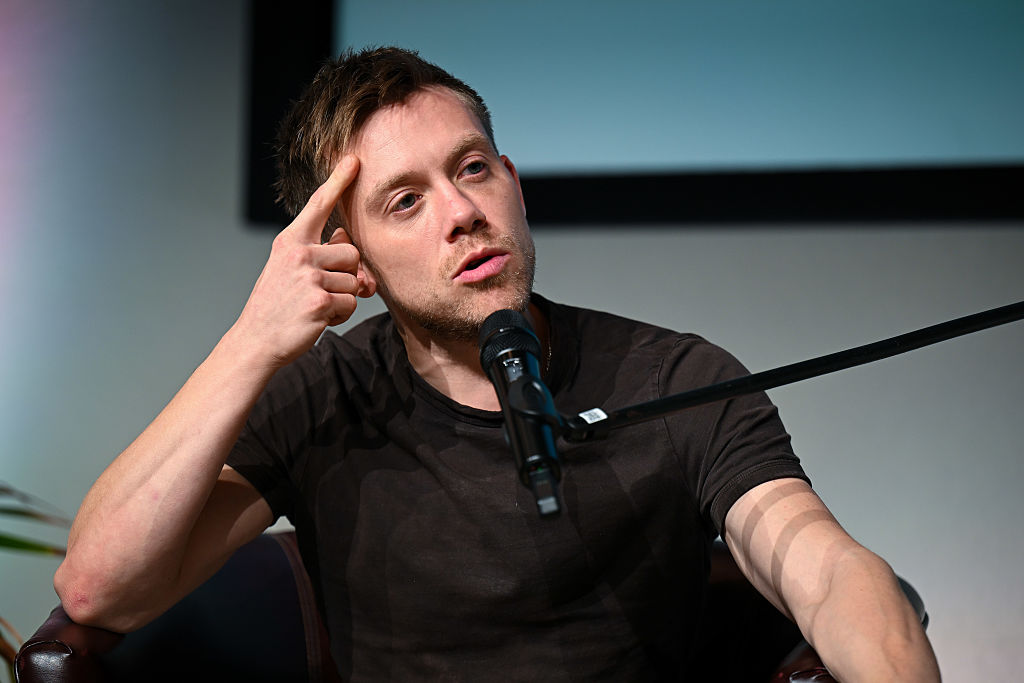
In 2011, Owen Jones solidified his reputation as one of Britain’s sharpest political commentators when he published Chavs: The Demonization of the Working Class. In the aftermath of the longest-serving Labour government in history, Jones asked how working-class people came to be vilified not just by elites but by representatives of the parties that supposedly existed to serve their interests. He followed this book up in 2014 with The Establishment: And How They Get Away With It, a study of Britain’s powerful elite.His most recent book, The Fall of the West: How They Really Lost, looks at the dangerous and hysterical politics that emerged after the 1990s, the period that came to be known as “the end of history.” For Jones, the decline of the West that conservative commentators obsess over is not driven by immigration or the permissive culture of liberalism but by the self-inflicted harms caused by decades of neoliberalism.Jones, who joined the Labour Party at age fifteen but canceled his membership two years ago, spoke to Jacobin the day after the party’s conference. In this interview, he discusses the strength of the soft left during these early days of Andrew Burnham’s premiership, the origins of the right-wing panic about the decline of the West, and what kind of organizations socialists need to really build power.John-Baptiste OduorYou’ve just come back from the Labour Party conference. What were your impressions?Owen JonesI left the Labour Party about two and a half years ago, which has obviously been great for my mental health; it’s been quite useful to be detached from it. Last year, I went, and you could feel the stench of death everywhere during the height of late Starmerism. Now the soft-left element feels quite triumphalist. It also thinks that it’s going to see off the left challenge from the Green Party, which was posing an existential threat to the Labour Party as they saw it.But I think the most disturbing dichotomy was obviously the limited shift on Palestine in terms of the sanctions, which was only secured because of a mass movement on the streets. It obviously doesn’t go anywhere near far enough, but we shouldn’t demobilize people and make people think there’s no point campaigning and organizing. Gains can be secured through mass pressure. We need to encourage people to keep fighting and organizing.John-Baptiste OduorOne of the lessons that Burnham seems to have learned from his predecessor is that the problem with Keir Starmer was a communications issue. What you needed was sparkly, Zohran Mamdani–style video work to give the impression of listening to the concerns of people on the Left. That doesn’t necessarily have to translate into a left policy program if you can saturate the media with images of yourself looking busy. Many of the center-left media have taken Burnham at face value. Do you see him as offering Starmerism with better PR, or do you think there’s been a genuine shift?Owen JonesStarmerism pretended to be more right-wing than it was. I’m not saying he was left-wing in any shape or form, but he emphasized the most reactionary elements of his program, beginning with cutting the Winter Fuel Payment, attacking disability benefits, committing to the so-called fiscal rules [of budgetary restraint], and the authoritarianism epitomized by his government’s crackdown on Palestine Action.What Burnham is doing, I would say, is bringing to the fore the mild social democratic elements that already existed in that program and trying to stitch them together with an analysis and a vision. So, the seminationalization of the railways, the mild improvements in workers’ rights, and the increase in investment in certain areas are now being stitched together with an analysis and a vision. This didn’t exist before. Now there’s talk of ending neoliberalism without actually changing the substance.John-Baptiste OduorThe main challenge Labour has faced has come from the Greens, led by Zack Polanski. He has succeeded in mobilizing a coalition of people frustrated with austerity and Labour’s position on the genocide in Gaza. This constituency — much like the voting bloc behind the independent MPs who stood and won against Labour in 2024 — has been made up of Muslims frustrated by the Islamophobia and hawkishness of the Labour Party and progressive left-wingers. How did this coalition emerge?Owen JonesThat electoral coalition is largely in urban England. We’re talking about the Greens and various independents, because there is also a separate dynamic in Wales, where Plaid Cymru is picking up disaffected support from the Left. In Scotland, there is the dynamic involving the Scottish National Party and the Scottish Greens.In English cities and some towns — Greater Manchester, Bristol, Birmingham, Sheffield, and so on — it’s Muslim voters who, I think it is always important to emphasize, have been affected by Israel’s genocide. But that disaffection predates the genocide. We saw Muslim disaffection with Labour before the genocide began. It’s due to Islamophobia, the so-called war on terror, the legacy of the Iraq War and the wars in Afghanistan and Libya. It’s about how Muslims have been othered during the war on terror.It’s also due to the fact that Muslims suffer disproportionate levels of poverty and unemployment and face discrimination. All of that has come together and politicized them. But of course, when you speak to Muslim voters, they often talk about issues such as housing and the National Health Service, which have affected them.There are about four million British Muslims. They have become part of a coalition with younger voters in urban areas, often in precarious employment and privately renting in diverse communities. Israel’s genocide is part of what has politicized people. But it’s also years of austerity and the unprecedented squeezing of wages since 2008.It’s important to say that I’m not arguing that millions of people have suddenly become politicized socialists. I wish that were true. Most people outside an activist movement would not describe themselves that way. You do, however, have a very politicized constituency of people in a way that did not exist before.There have been waves of political events. The Iraq War was the first major one. Then came the crash and austerity; the social and economic impacts of COVID-19, which are sometimes forgotten; the genocide; and Starmer’s inadequate response to the UK’s broken economic and social system.The question is, when will the contradictions of Burnhamism come to the fore? I think that is likely to happen [next month] when the budget is announced. We can see previews of what might come in Labour’s attack on the triple lock [which increases the value of state pensions each year in line with inflation]. Getting rid of it will hurt younger people in the future because younger people are aspirational pensioners.But whatever the Greens say or do now, they are going to struggle during the honeymoon period of Burnhamism. Burnhamism emerged because of pressure from the left flank, and it is trying to deal with that to restore Labour’s hegemony. There were genuine fears among sections of the Labour hierarchy that they were going to lose their hegemony over the progressive bloc permanently. Restoring that hegemony is what they are focusing on now. The underlying essentials will reassert themselves.John-Baptiste OduorYou argue in your book that many of the problems Western democracies face are the products of poor decisions they made after the 1990s “end of history” period.Owen JonesIt was the economic, military, and moral triumphalism that followed the end of the Cold War that led to their downfall. In the 1990s, the West created an ever more financialized system based on extraction rather than investment, ever greater deindustrialization, and ever more complex financial products instead of making things. Companies increasingly gave money to shareholders in the form of share buybacks and dividends. Even before the crash, you saw stagnating and falling wages for huge numbers of people.Then you got military adventurism based on the same principle: “We’ve won. It’s the end of history. Our military opponents are no more, so we can do as we see fit.” It was all underpinned by moral triumphalism.Those forces collided. The wars [in Iraq and Afghanistan] cost vast sums of money, which in the case of the United States diverted huge amounts of money away from the economy and weakened it when the financial crash happened. At the same time, the reason the far right has risen in the way it has is that the dogma that “There Is No Alternative” collided with what I call a great reverse.To restore the old system, there was a full-scale attack on living standards, security, the public realm, and economic and social rights. That led people to believe they were in a zero-sum game, competing for ever-scarcer resources. At the same time, there was population movement fueled by the instability created by Western wars, and that became the scapegoat for the wreckage.People felt, or were encouraged to believe, that if there was no alternative to the economic system, their lives could only be improved by removing competition. That meant migrants and refugees, as well as various stigmatized minorities. This is what the far right has fed on, particularly in the age of the war on terror. In this context, Muslims have been racialized and cast as an existential menace.John-Baptiste OduorThe ongoing war between Russia and Ukraine is, you argue in your book, related to this Western hubris. Could you talk us through this?Owen JonesWith Russia, you see economic and military triumphalism collide with each other. After the Soviet Union collapsed, shock therapy was promoted. That was the jewel in the crown of post-1991 triumphalism.Russian elites did not have a gun to their heads. Leon Trotsky noted in The Revolution Betrayed that the Soviet bureaucracy lacked property rights. It had privileges conferred by the state, and it wasn’t a class; it was a caste. With the restoration of capitalism, he predicted, it could become a class. Instead of having privileges, it would have property rights.You saw that with a receptive section of the Soviet bureaucracy becoming the new so-called oligarchy. It happened during a period of capitalist triumphalism. Neoliberalism was hegemonic in the West and was actively promoted by Western states, economists, and institutions, including the International Monetary Fund.That led to the worst peacetime economic collapse of any industrialized nation other than Ukraine, which had a slightly worse economic collapse at the same time. I interviewed Wayne Merry, who was the chief political analyst at the US embassy, for my book. He is not a left-winger in any shape or form, but he saw the political and economic consequences of shock therapy.He saw a society unraveling, a collapse in life expectancy and health, and an explosion in poverty, with people begging and starving in the streets. In 1994, he sent a memo warning that, although Russia was then a pro-Western state with pro-Western leadership, the situation would lead to antidemocratic and anti-Western elements triumphing and to a return to an adversarial relationship between the West and Russia.At the same time, in terms of NATO and the Western military bloc expanding toward Russia, George F. Kennan, the American diplomat who coined the term “containment” and was the architect of postwar containment policy toward the Soviet Union, was not a tankie. The West had promised not to expand NATO to the Soviet leadership when the Soviet Union was collapsing. The private view of the West, according to the declassified documents, was that Russia was weak but would not always remain so. It was weak because of the economic collapse and the policies the West had promoted. The view was that while Russia was weak and unable to resist, NATO should expand as far as possible. It was a kind of insurance policy and a form of containment.Kennan and other American establishment figures warned that this would provoke hostility from Russia. Even the pro-Western elite in Russia was infuriated and enraged by it. It was responding partly to sentiments within Russian society.You had a combination of economic ruin and the mass anger and disillusionment that this caused, as well as a sense of humiliation at the West. At the same time, Boris Yeltsin shelled the legislature and possibly killed hundreds of people in 1993, with the active support of the West. He helped rig the 1996 presidential election with Western support. That helped discredit democracy as a concept in Russia, because people associated what they called democracy with an oligarchic, authoritarian, and undemocratic regime.I’m not saying everything is always caused by the West. There are other factors and other social forces at play. But the West played a pivotal role in creating the conditions out of which Putinism emerged. It’s pointless pretending otherwise. It’s simply what happened.John-Baptiste OduorAt points, it seems like you treat the decline of the West as entirely a product of the choices of elites. But weren’t elites up against real structural constraints? The lack of competitiveness of European industry in a world of Chinese growth is a real thing. Declining birth rates are real — so too is the effect that they’re going to have on the tax base of Western democracies, in a world where the ratio of workers to dependents will change radically. Similarly, the fact that large parts of the constituencies of the Left are very invested in supranational and antidemocratic institutions like the United Nations and the European Union has made left politics practically incoherent.These don’t seem like issues that can be reduced to mistaken decisions. It seems like there’s a deeper problem with the left alternative.Owen JonesFirst of all, the West would be in decline anyway. The argument in my book is that the West’s decline was inevitable. My point about triumphalism is that it makes the decline chaotic because the West behaves as though it’s stronger than it is, given the material conditions. Its economic supremacy obviously causes problems. By doubling down on an economic system that benefits elites and is about extraction rather than investment, the West creates dire consequences. Military adventurism assumes that Western military supremacy existed in the way they thought it did. That is a case of triumphalism colliding with reality.It’s important to make the point that Western decline was always going to happen, but it has become chaotic because Western elites opportunistically used the end of history moment for their own benefit.In terms of the wider challenges for the Left, of course, it’s not simply a case of there being an economic order based on extraction rather than investment, or of the balance shifting in favor of capital over labor. There are other wider structural problems in Western societies that we must address. That’s definitely true; an aging population is one example.Even if you restore the old social democratic consensus that existed, which the Left wanted to transcend, it was based on a broader tax base. One of the clever things the [2010 Conservative–Liberal Democrat] coalition government did was to further undermine that. So, if we simply increased taxes on the top 5 percent or on big business, it’s unclear whether that would even produce the revenues we need.The book isn’t about the West in general. It’s about why the West is in chaotic decline and how that has led to the rise and resurgence of far-right authoritarianism.The Left in the 2010s began to reemerge as a political force. It didn’t exist in 2008, when the financial crash happened, as a meaningful, coherent force. It was fragmented and defined by what it was against, not what it was for. It didn’t have a coherent vision for the world of capitalist globalization, the end of the triumphalism at the end of the Cold War, or what that meant for the Left and the defeats suffered by labor movements.It started to reemerge in the mid-2010s through Corbynism, Syriza, Podemos, Bernie Sanders, Jean-Luc Mélenchon, and similar movements. But these movements didn’t have the political experience or the economic vision that already existed. They were suddenly put in very adverse political circumstances and had to learn at the same time.The Left is intellectually in a much better position than it was in terms of developing a vision to deal with the world as it actually is, with all the challenges that go beyond the basic problems of the economic system. That doesn’t mean we have resolved all our internal contradictions.The Left’s coalition includes people who are socially progressive and socially conservative. It includes people who have more illusions in existing institutions than others do. It includes people who emphasize social progress more than challenging the economic order.That’s why I think the danger for the Left, particularly in the so-called culture wars, which were a manufactured backlash against the rights and demands of minorities, is allowing itself to be caricatured as obsessed with identity politics. This is what happens when class is stripped out of the equation.Mamdani hasn’t thrown migrants or trans people under the bus. He’s focused on the economic issues that unite and transcend the divisions within the Left’s internal coalition. He obviously has people voting for and supporting him who don’t have good politics when it comes to trans people or migrants, but he hasn’t conceded anything to them. He’s focused on what unites an otherwise divided coalition. I think that’s what we have to learn from.John-Baptiste OduorMamdani was partly a product of the Democratic Socialists of America (DSA), which is a party-like organization capable of engaging in political education and cadre formation. Nothing like it exists in the UK. Attempts to create an equivalent organization that is outside of a mainstream party but able to act on it have largely failed. Do you think the Left needs something like an organization with a party-like structure to be able to wield electoral power effectively?Owen JonesI think so. The reason that an organization like this hasn’t come into existence in the UK is that the circumstances are different. In the United States, the Democrats are not really a political party in the way we have political parties in Europe. The negative side of this amorphousness is that they are traditionally dominated by corporate interests and lack democratic structures. At the same time, in Britain, if the Labour leader wants to get rid of a candidate, they can simply do it. That’s what Starmer tried to do. He carried out a purge of the Left within the Labour Party.You can’t do that in the Democratic Party. You can’t arbitrarily exclude anyone. It doesn’t matter what Alexandria Ocasio-Cortez says or does; they can’t get rid of her. What they can do, and what the American Israel Public Affairs Committee (AIPAC) has done, is use big money to defeat candidates. That got rid of Cori Bush, for example. But I think that strategy has hit the buffers, because the backlash against AIPAC is so great that it has diminishing returns.In the age in which we live, partly because of the internet, the Left can raise money on a mass scale. Bernie Sanders pioneered that on the Left. Through online crowdfunding, you can challenge the power of big money in politics in a way you couldn’t before.DSA can stand aside from formal party politics because it isn’t an entryist organization in the Democrats. You can operate that way because the Democrats are an amorphous party in which individual candidates are selected through highly personalized primary competitions. Those competitions rely on building a war chest of money and resources and a grassroots army to get candidates selected.You can’t do that in Britain. Instead, you have a closed selection system in which the National Executive Committee of the Labour Party draws up a long list and a shortlist and can easily prevent someone like AOC from being elected.That is why left-wing candidates have to emerge primarily through the Green Party. You have a pool of progressive people in which anyone who wants to put themselves forward can do so and they’re not in a massive internal competition to get selected for a particular seat.John-Baptiste OduorA friend of the magazine, Anton Jäger, published a book called Hyperpolitics, and one of its arguments is about the effects that deinstitutionalization has had on the Left. In the UK, what you have is a center left that is highly institutionalized. That means outsiders can’t challenge the Labour Party, whereas in the United States the Left is incredibly weak and lacking in institutions, so outsiders are able to take over the Democratic Party, at least in primaries.Envy of Mamdani often, to me, dovetails into envy of American political fragmentation. The latter opens the door to a certain kind of chaos.Owen JonesI’ve seen clips from some DSA conferences. I feel bad because the clips I’ve seen are generally rage bait posted by right-wing accounts, but it’s difficult not to have concerns about the way political discourse works within organizations that are so open. I don’t want to pile on that person whose comments went viral, so I’ll stop here.The problem is that you need a political environment that is inclusive and allows representation, particularly of underrepresented minorities. That remains a major problem for the Left. People from privileged backgrounds often end up dominating, and we have to rectify that.At the same time, I think Yascha Mounk had a point in his book The Identity Trap, where he argued that a culture had emerged in which people defer to what is defined as lived experience. That can produce conflicting outcomes, because conflicts arise between people with different lived experiences. And these conflicts can be very difficult to resolve.A fear of discipline can emerge because discipline is seen as authoritarian or not inclusive. But you need discipline, leadership, focus, and a Left that addresses people’s actual material conditions. It needs to speak to where the working class is and address its priorities. Otherwise we are never going to achieve mass support.Mamdani is a good example of that. He’s perhaps the most disciplined person I’ve ever seen. When someone heckles him, he brings the discussion back to the cost of living: “I want to fight for the right of that heckler to be able to live in New York so he can keep heckling me.”A Left that abandons or throws minorities under the bus is not a Left I want to be part of, and it is not worthy of the name. That doesn’t mean we can’t build a Left that focuses on uniting the working class as a rainbow coalition.This article originally appeared in Jacobin, a democratic socialist magazine publishing long-form essays and analysis on politics, economics, and culture. Subscribe to the print edition for $20 a year.
Visit sportfeeds.autos for more information.